Last updated November 23, 2026
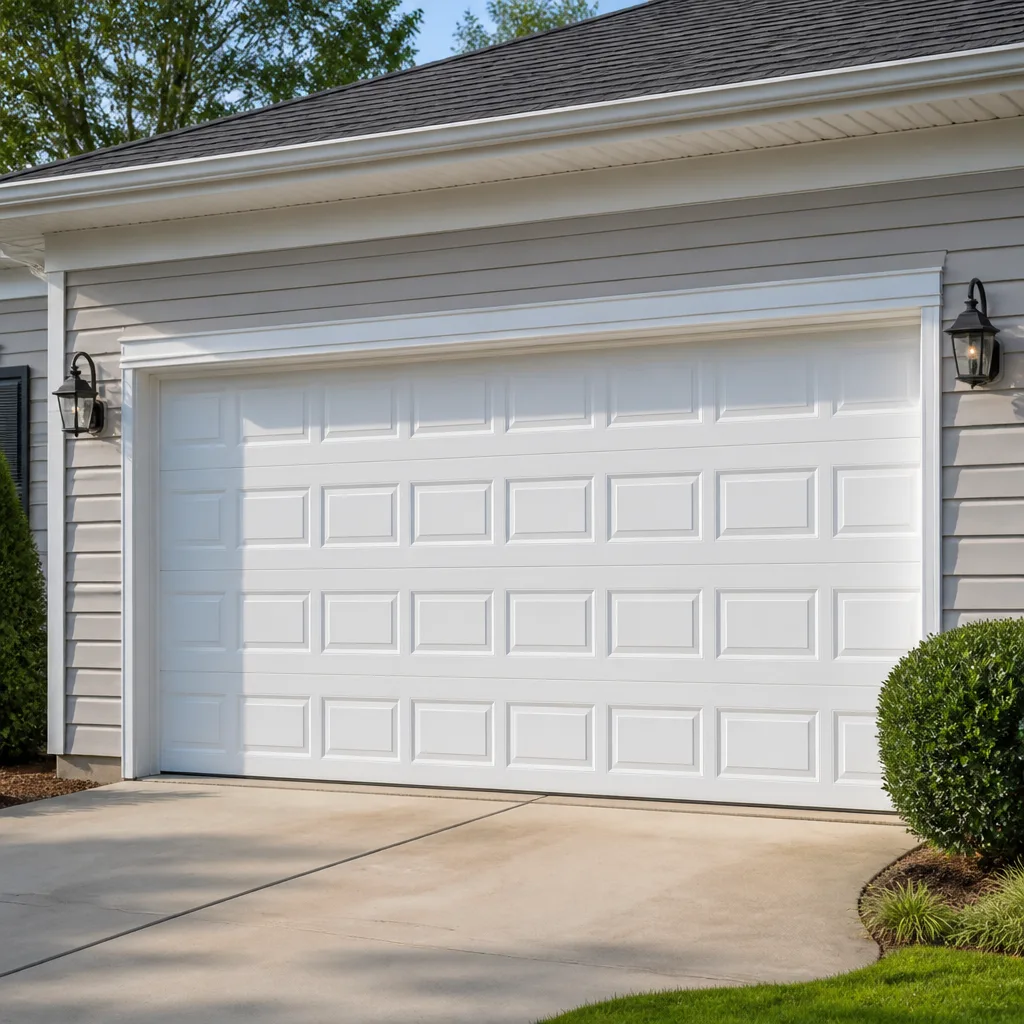 Raised-panel steel
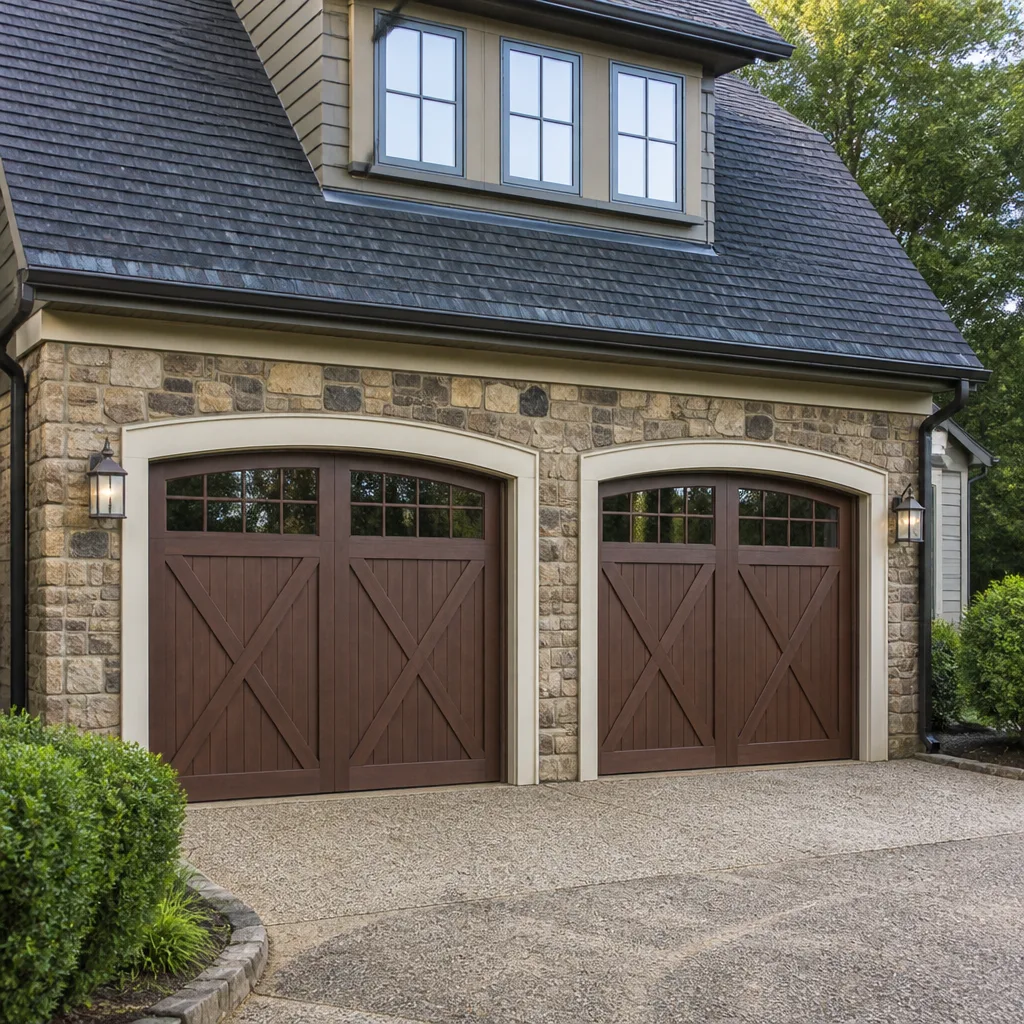 Carriage house
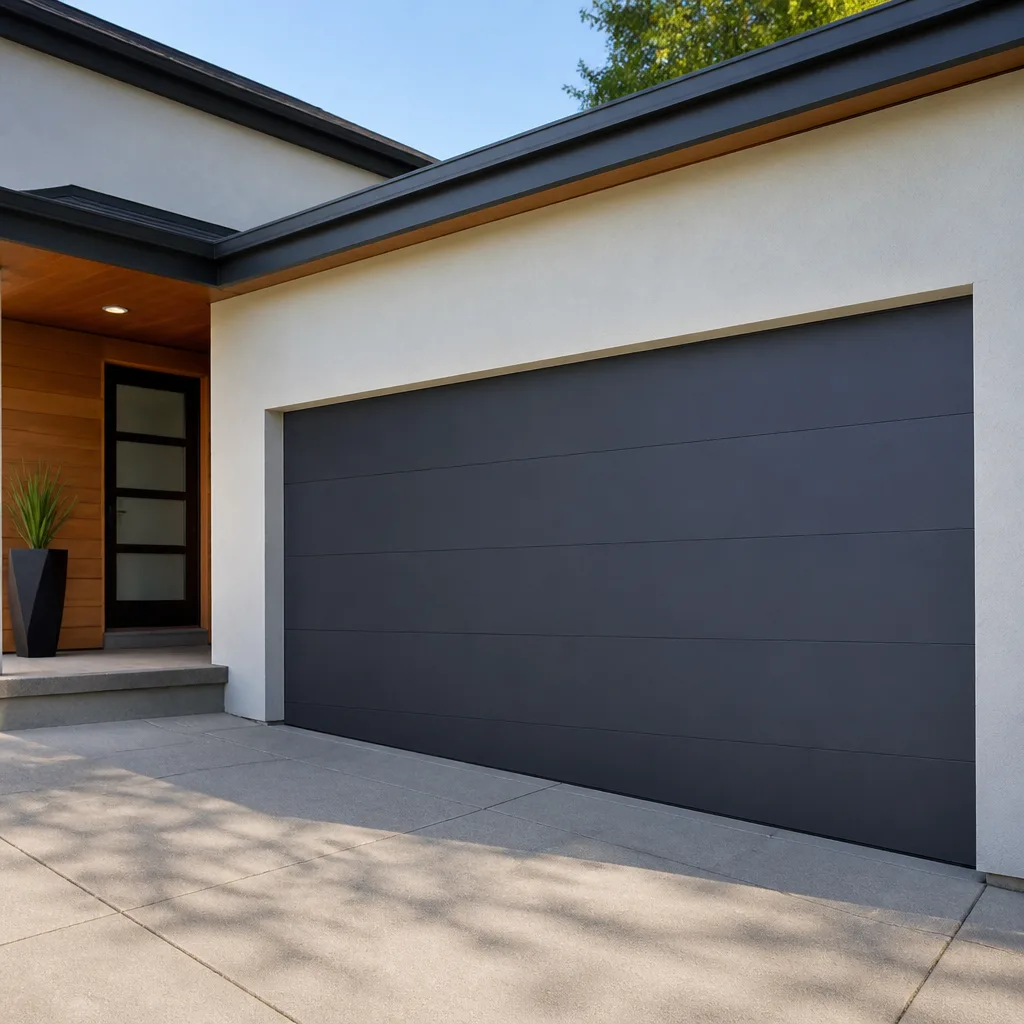 Modern flush
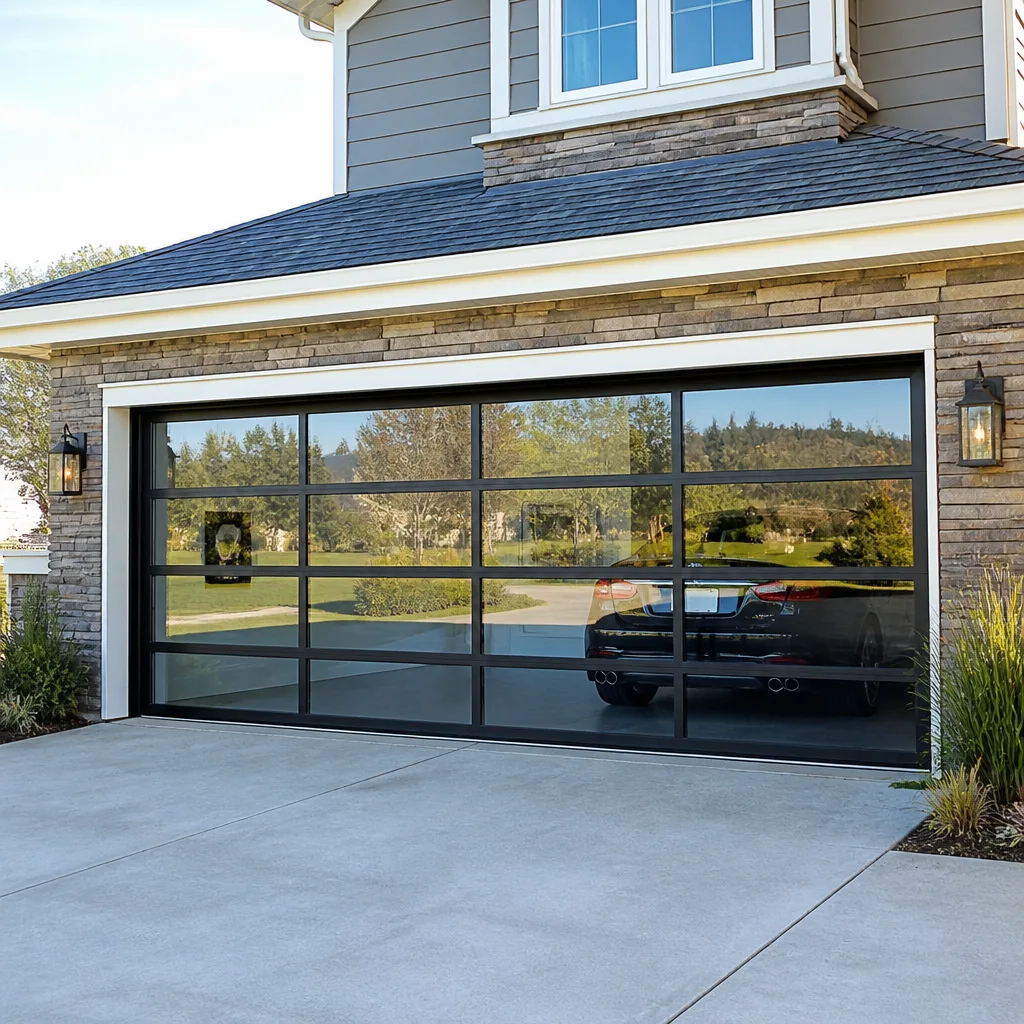 Full-view glass
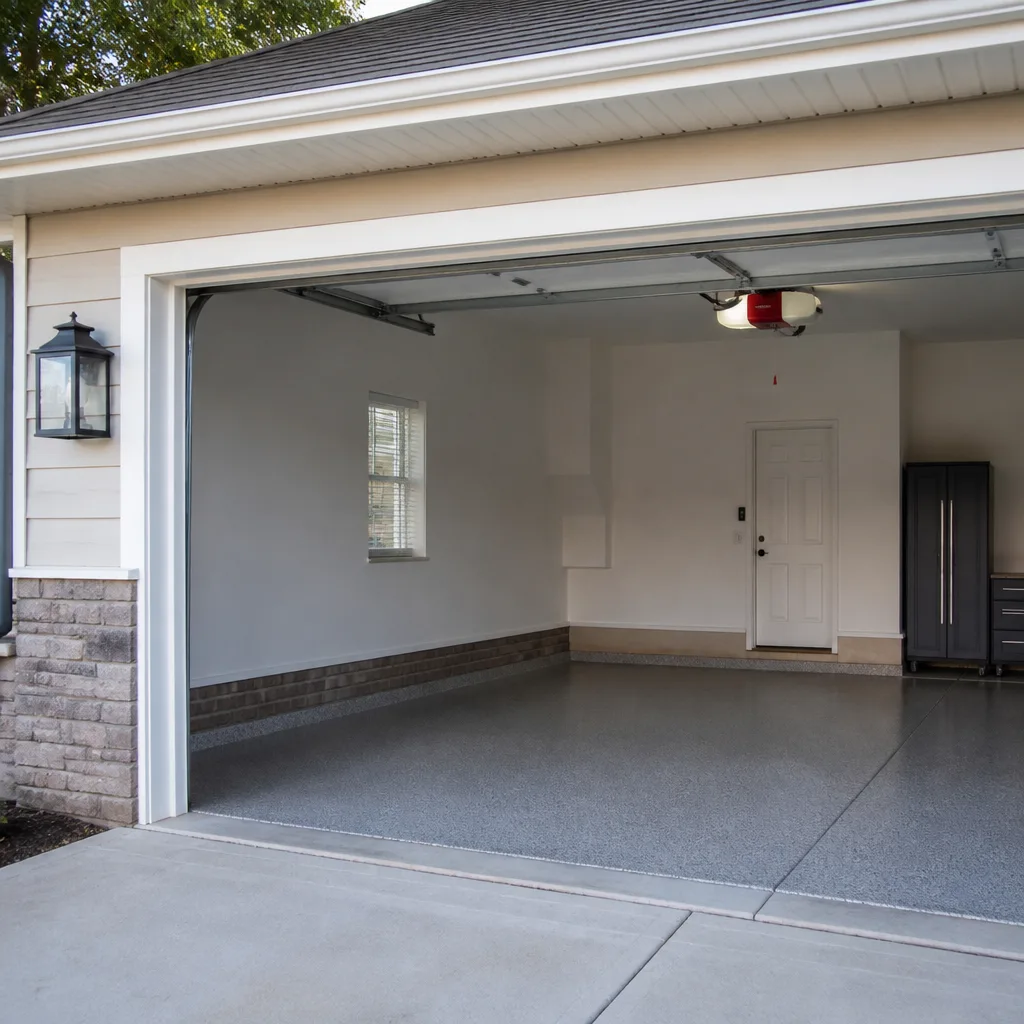 LiftMaster openers
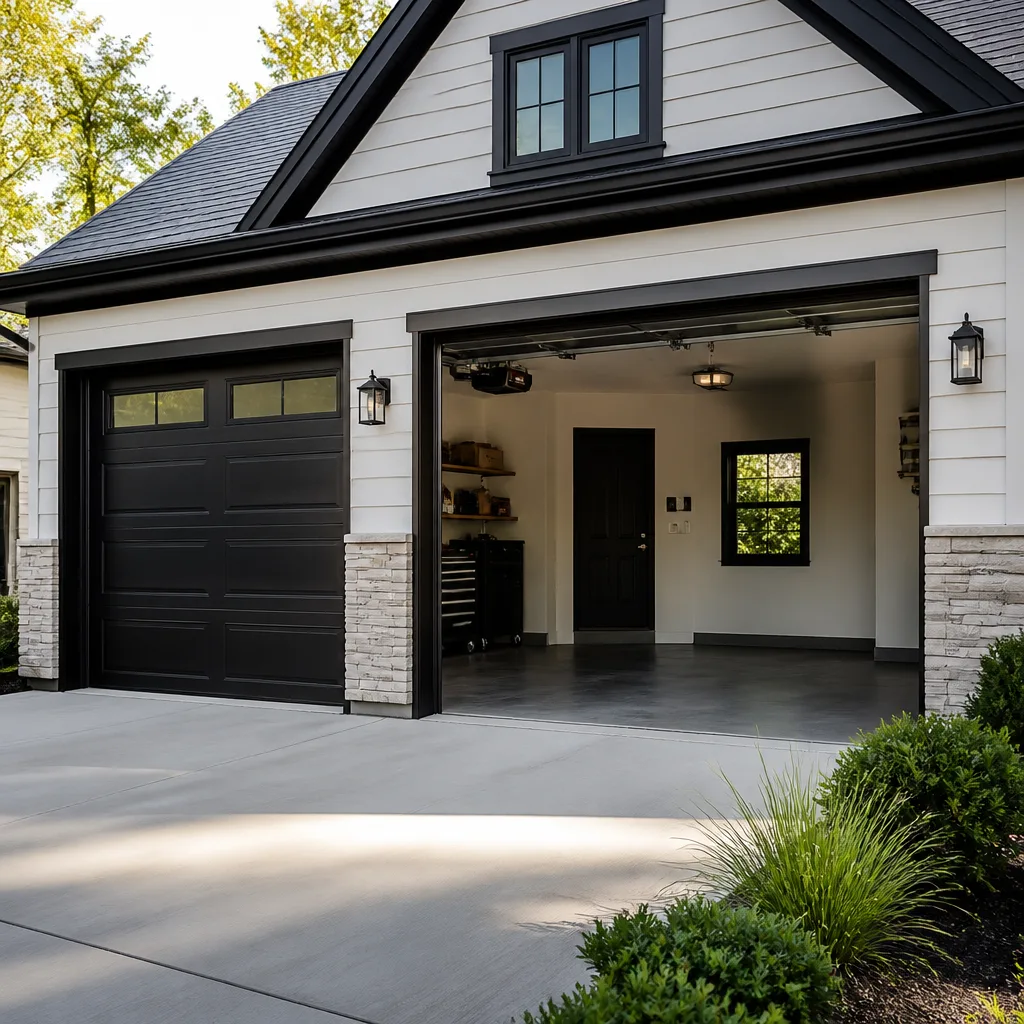 Chamberlain openers
Full 25-point door and opener safety check with every visit - springs, cables, rollers, tracks, and your LiftMaster or Chamberlain opener included
You get a price before we start. It does not change when the pro arrives.
Get your free estimateGarage Door Repair Maintenance Checklist for Burke Homeowners
Most garage door checklists are written for inspectors. They tell you to “inspect the rollers” or “check the balance” and leave you standing in the driveway staring at a hinge, wondering whether what you’re looking at is fine or about to fail. A garage door has a dozen or more moving parts that wear independently, and the ones that cause the most expensive damage – rollers, bottom seals, cable drums – fail quietly. Nothing announces them until the door stops moving. This checklist is different. It’s built around what a healthy door actually looks, sounds, and feels like, so you can spot the deviation instead of guessing. We’re a garage door specialist working in Burke, and this is the same sequence our technicians walk through.
Quick Answer
A good garage door maintenance routine means knowing your door’s normal sound and feel first, then checking the bottom seal, rollers, and cables monthly, testing the auto-reverse and force settings every month, and lubricating the right parts twice a year on a schedule that fits Burke’s humid summers and freezing winters. Anything that changes suddenly – a new noise, a door that drifts, a cable that looks slack – is your cue to stop using the door and get it looked at before a small wear item turns into a spring or opener failure.
Styles & brands we work with
- Raised-panel steel
- Carriage house
- Modern flush
- Full-view glass
- LiftMaster openers
- Chamberlain openers
Table of Contents
- What Normal Operation Sounds and Feels Like
- The Three Components Burke Homeowners Skip Most
- How to Test Auto-Reverse and Force Settings Without Tools
- Lubrication: What to Grease, What to Leave Alone
- A Seasonal Schedule Built for Burke’s Climate
- The Monthly Walk-Around: A Five-Minute Check
- Cables and Springs: What to Observe, Never Touch
- Opener Health and Brand-Specific Cues
What Normal Operation Sounds and Feels Like
Before you can spot a problem, you need a baseline. Most Burke homeowners have lived with their door for so long they’ve stopped hearing it. That’s the trap. A door that has slowly gotten louder or rougher over a couple of years doesn’t register as broken because there was no single moment it changed. So the first job is to recalibrate your ear.
Stand in the garage and run the door up and down a couple of times with the light on. A healthy door produces a low, steady mechanical hum from the opener and a soft roll from the wheels in the track. There’s no grinding, no screech, no rattle that shakes the wall, and no pause or jerk midway. The door should move at an even pace from fully closed to fully open and back, without speeding up or slowing down oddly.
Now the feel. With the door closed and the opener disconnected (most openers have a manual release cord you pull to disengage), lift the door by hand about halfway. It should feel manageable – a well-balanced door needs only modest effort and stays put when you let go. If it crashes down, races up, or feels far heavier than it looks, the springs are out of balance.
- Sound: steady hum, soft wheel roll, no grinding or rattling
- Motion: even speed, no jerks or hesitations, straight travel in the track
- Feel by hand: light, balanced, stays in place at mid-travel
- Alignment: door sits flush and level in the opening, panels line up
- No gaps: the bottom seal meets the floor along its whole length
Write down what you observe, or just commit it to memory. Every check below is measured against this baseline. If you can’t establish a clean baseline because the door is already noisy or heavy, that’s your first call – and it’s a good moment to have a specialist look. For that, you can always reach Burke Garage Door Repair Pros.
The Three Components Burke Homeowners Skip Most
In our experience, three wear items account for the majority of service calls we get in Burke – and all three are things homeowners routinely walk past. None of them announce failure loudly. Each one quietly degrades until it drags something bigger down with it.
1. The Bottom Seal
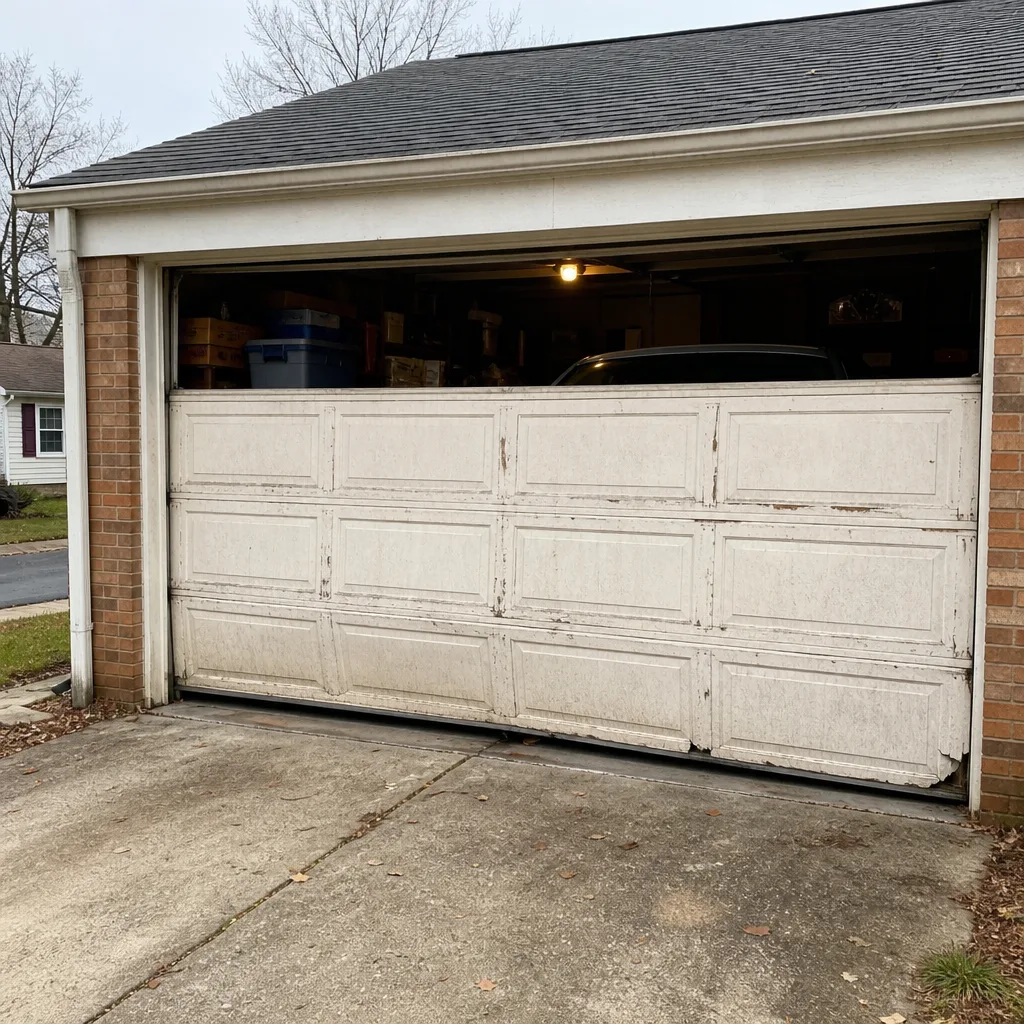
The rubber or vinyl seal along the bottom of the door keeps out water, cold air, insects, and small rodents. In Burke’s climate it takes a beating: hot, humid summers soften and crack it, and freezing winters make it brittle. A failing seal looks flattened, torn, or detached in spots, and you’ll see daylight or feel a draft under the door when it’s closed. Left alone, a bad seal lets moisture onto the threshold and floor, and the door itself starts slamming metal-to-concrete on every close.
2. Roller Wear
Rollers are the small wheels that carry the door in its track. Steel rollers are common and durable but get noisy; nylon rollers are quieter but wear flat over time. A worn roller has a flat spot or wobbles in its stem, and you’ll hear a rhythmic thump or feel the door hitch as it passes the bad spot. Worn rollers also let the door shift slightly in the track, which accelerates wear on everything else. This is one of the cheapest items to replace and one of the most commonly ignored.
3. Cable Slack
The lift cables are the braided steel lines wound on the drums at the top corners. They should be evenly tensioned and neatly wound. Slack, fraying, or a cable sitting outside its drum groove is a warning sign that something upstream – often a spring – is changing. Cables are also under extreme tension. You can observe them from a safe distance; you should never adjust, tighten, or touch them. We’ll come back to that distinction.
These three items explain most of what we’re called out to fix in Burke. Check them every month. A five-minute look saves a lot of grief.
How to Test Auto-Reverse and Force Settings Without Tools
Every garage door opener sold in the U.S. since the early 1990s has two safety systems: a mechanical auto-reverse (it reverses when it hits something) and a photo-eye system (it reverses when the beam between the two sensors at the base of the track is broken). Both can fail silently. Testing them takes about two minutes and no tools, and it’s the single most important safety check on this list – especially in a household with kids or pets.
- Photo-eye test: With the door open, wave a broom handle or your leg through the beam between the two sensors near the floor. The door should reverse or refuse to close. If it closes anyway, the eyes are misaligned, dirty, or dead.
- Mechanical reverse test: Lay a roll of paper towels or a 2×4 flat on the floor in the door’s path. Close the door using the wall button. When the door contacts the object, it should reverse within a couple of inches. If it crushes the object or keeps pushing, the force setting is too high.
- Listen for the click: Many openers make an audible click when the reverse triggers. That click tells you the mechanical system is working.
- Watch for hesitation: If the door pauses before reversing, the force setting is borderline and worth having checked.
What a failure means: if the photo-eyes don’t respond, the sensors need cleaning or realignment, or the wiring or opener board is at fault. If the mechanical reverse fails, the force setting is too high – that’s a risk to anyone under the door. Either failure is worth a call, especially if your opener is older. Modern openers from brands like LiftMaster and Chamberlain have more reliable safety circuitry, and if your unit is older and its safety features no longer respond cleanly, it may be time to talk about a replacement. That’s a conversation about opener age, not a sales pitch. To get a professional read on an aging unit, garage door opener repair is the right starting point.
Lubrication: What to Grease, What to Leave Alone
Lubrication is where well-meaning homeowners do the most accidental harm. The rule is simple: lubricate what rolls, slides, and hinges, and never lubricate what grips. Get that backwards and you’ll create problems instead of preventing them.
What to Lubricate
- Rollers: a couple of drops of light machine oil or a small spray of garage-door-specific lubricant on each roller’s stem, not the wheel face.
- Hinges: a small spray on each hinge pivot point.
- Track (lightly): some technicians apply a very thin film inside the track. Others leave it dry. Either is defensible; what matters is that the track stays clean.
- Springs (light): a light coat on the coils reduces squeak, though you should never get your hands near a torsion spring while doing it – spray from a distance or leave it to a pro.
What Never to Lubricate
- The track where the rollers ride (heavily): too much grease collects grit and turns into grinding paste.
- The photo-eye lenses: grease blurs them and defeats the safety system.
- The belt or chain drive: most are pre-lubricated and don’t need it; adding oil attracts dust.
- The bottom seal: silicone is fine to keep it supple, but petroleum-based products degrade the rubber.
- Anything on the spring or cable under tension you can’t reach safely.
Use a product made for garage doors rather than whatever’s in the shed. WD-40 in its standard form is a solvent, not a long-term lubricant, and it’ll wash away the good stuff. Twice a year is enough. More often than that and you’re just attracting dirt.
A Seasonal Schedule Built for Burke’s Climate
“Twice a year” is the generic advice. It’s not wrong, but it ignores the fact that Burke’s year has specific pressure points. Here’s how we’d time it for a Virginia door.
Early Spring (March)
After a winter of contraction, ice, and road salt tracked into the garage, this is your deep check. The freeze-thaw cycle loosens hinges, stiffens seals, and stresses springs. Look for rust starting on the hinge plates and hardware. Check the bottom seal – winter is when it takes the most punishment. Wipe down the track to clear grit. This is the best time for a full lubrication pass.
Late Spring (May)
Before the summer humidity sets in, test the safety systems again and clear the track thoroughly. Pollen and grit accumulate, and wet springs can drive insects toward the bottom seal gaps.
Late Summer (August)
After months of heat and humidity, check for warped or swollen wood panels (on wood doors), softening seals, and any sagging. Summer is also when openers tend to overheat and when a tired motor shows its strain.
Fall (October)
This is the preventive check. Clean and lubricate before the cold arrives, tighten any loose hardware, and verify the balance by hand. Cold weather is when springs are most likely to fail – steel becomes less forgiving, and a spring that’s been marginal all year will pick this season to break.
- March: deep check after winter; rust, seals, hardware
- May: safety system test before the humidity
- August: heat and humidity check; panels, seals, motor strain
- October: preventive lubrication and balance check
If you only do one session, do the October one. Getting ahead of winter is the single best thing you can do for a Burke door.
The Monthly Walk-Around: A Five-Minute Check
Once a month, walk around the door with the light on and run through this. It takes five minutes. It’s the routine that catches most issues before they become expensive.
- Look for daylight under the door when it’s closed. A visible gap means the bottom seal has failed.
- Run the door and listen for a new sound. Compare it to your baseline from the start of this guide.
- Watch the rollers. Look for wobble, flat spots, or chips as they pass.
- Check the cables are neat on the drums. Frayed, slack, or off-track cables are a stop-using-the-door signal.
- Pull the manual release and test the balance. Lift to halfway; it should stay put.
- Test the photo-eyes and mechanical reverse. Two minutes, as described above.
- Wipe down the track. A dry cloth is enough.
- Look at the hinges. Loose screws and rust are the giveaway.
Log anything you find. If a month passes and the door is no better – or worse – that’s your cue. In-between issues get their own category. For the more general category of problems, garage door repair covers the range of things that go wrong with the door itself.
Cables and Springs: What to Observe, Never Touch
We need to be direct here. Torsion and extension springs and the lift cables attached to them are under extreme tension. They can and do cause serious injury when handled by untrained hands. This is not a “be careful” situation; it’s a “don’t do it yourself” situation. There is no safe homeowner repair on a tensioned spring, and no amount of YouTube will change that. Every professional garage door organization in the country agrees on this.
What you can safely do: observe. Here’s what to look for from a distance.
- Springs: Look at the coil for gaps, rust, or a visible break. An extension spring that’s lost tension will look saggy. A torsion spring can break without obvious external sign – the door just stops lifting or lifts unevenly.
- Cables: Should be taunt, evenly wound on their drums, and free of fray or kinks. If a cable is hanging loose, off the drum, or visibly frayed, stop using the door entirely.
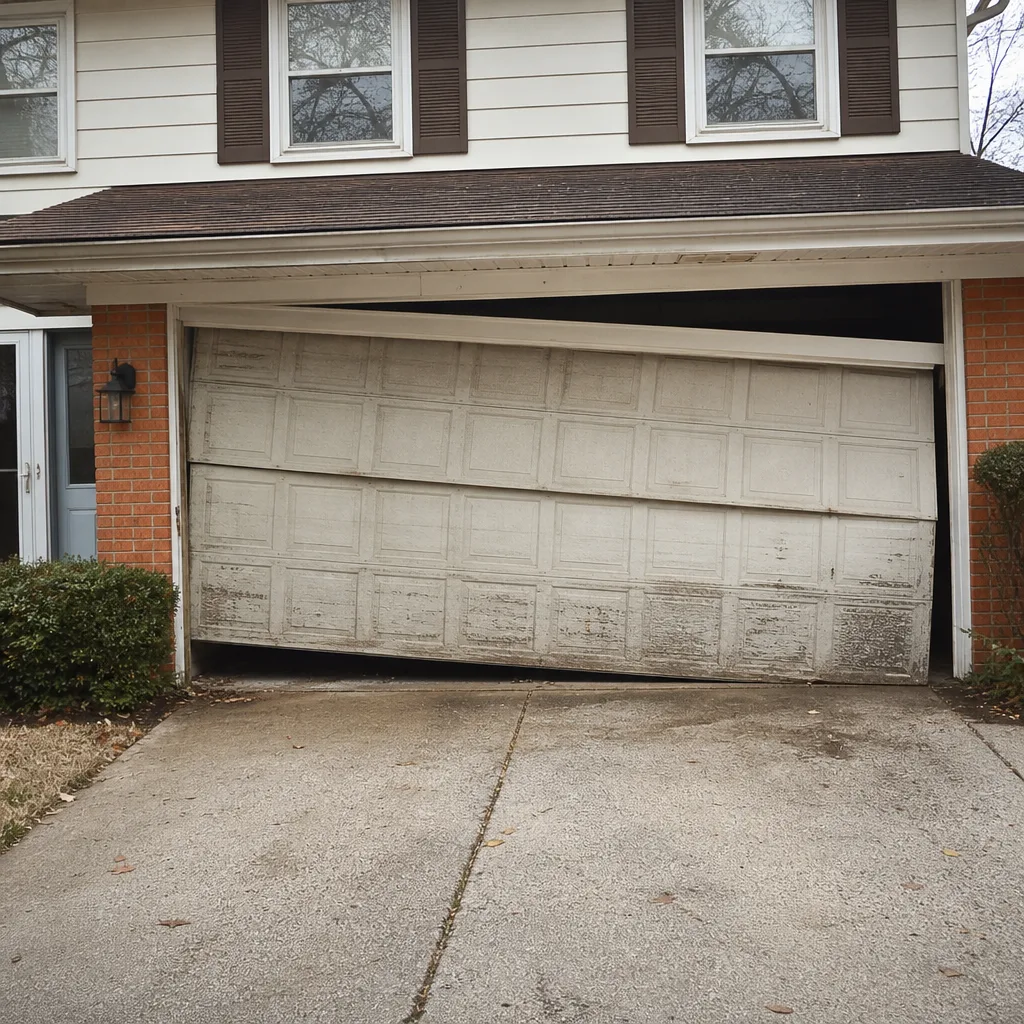
- The gap between door and header: An uneven gap on one side versus the other means the tension is imbalanced.
- Door tilt: A door that’s visibly not level when closed is a tension problem, not an alignment problem.
Here are the situations that mean “stop using the door right now and call”:
- A loud bang from the garage (the classic sound of a spring breaking)
- A visibly broken, sagging, or gapped spring
- A cable that’s loose or off the drum
- A door that will lift with the opener but drops when the opener releases
- A door that’s come off its track on one side
These are pickup-the-phone moments, not checklist items. A professional replacement is the only safe fix for a tensioned spring. That’s our garage door spring repair service, and it’s the highest-risk repair on the door. If your door is in that condition now, call us right away.
Opener Health and Brand-Specific Cues
The opener gets blamed for a lot of things that are actually the door’s fault. Before you assume the opener is dead, rule out the door. A door that’s out of balance, has a failing roller, or is dragging on a bad seal will strain any opener, no matter how good. So if your opener is struggling, test the door’s balance first.
Once you’ve confirmed the door is fine, here’s what to look at on the opener itself:
- Strain sounds: a groaning motor, or a motor that opens but struggles to close, is a sign of overwork.
- Hesitation: a delay of more than a second between pressing the button and the motor starting suggests the board is managing too much.
- Remotes losing range: weak or intermittent range on a remote that used to reach from the end of the drive is a sign of an aging board or interference.
- Random stops: an opener that stops mid-travel without an obstruction is a control-board issue.
Different brands show age differently. LiftMaster and Chamberlain units tend to telegraph board issues through inconsistent remotes. Genie units often give more warning before motor failure – they get louder first. Raynor openers are less common in this area, but the model line is usually clearly labeled on the head unit – if you’re not sure what you have, the sticker on the back panel of the motor housing is the first place to look. No need to guess. We work with all of these brands and the door brands they attach to, including Clopay, Amarr, Wayne Dalton, and Craftsman. The point isn’t a brand preference – it’s that you don’t get pressured into a brand switch just because a technician only knows one system.
A note on opener age: If your opener is original to the house and predates the auto-reverse standards, or its safety features have stopped responding, it’s a genuine replacement conversation. Modern openers are saver, quieter, and have better battery backup. It’s worth having that conversation with someone who works across all the major brands.
Common Mistakes to Avoid
- Assuming a loud door is just an old door. In Burke, a loud door is usually a worn roller, a dry hinge, or a failing seal – each cheap to fix. Living with the noise is how you end up with a bigger bill down the line.
- Trying to lubricate or adjust the springs yourself. Springs and cables are under extreme tension and are the most dangerous part of the system. Observation is fine; touching is not.
- Ignoring the bottom seal through a Burke winter. A cracked seal lets in moisture and cold, and the door starts slamming metal-to-concrete on every close. That’s wear you can’t undo.
- Bypassing the safety tests because “it worked last time.” Auto-reverse and photo-eye systems can fail between tests, and a failure means a risk to anyone under the door. Test them monthly.
- Backing the car in when the door half-opens. If the door is behaving oddly, don’t try to “get it to open” by running it repeatedly. Each cycle puts more strain on the failing part.
- Assuming your opener is broken when it’s the door. Nine times out of ten, a sluggish opener is actually a door out of balance. Test the balance first.
- Choosing a general handyman for a spring or opener issue. Garage doors are a specialty trade, and the diagnostic and safety knowledge is specific. This is worth a call to a specialist.
See the difference
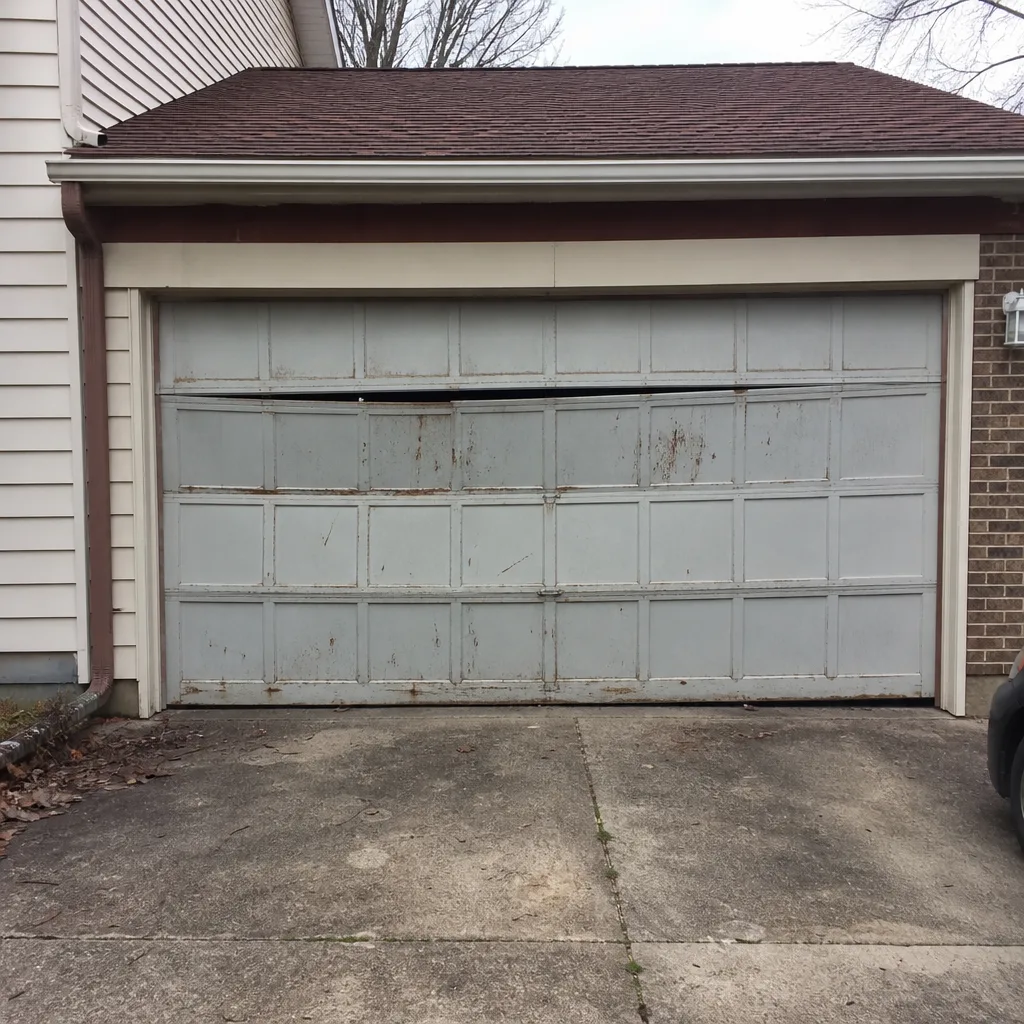 Before
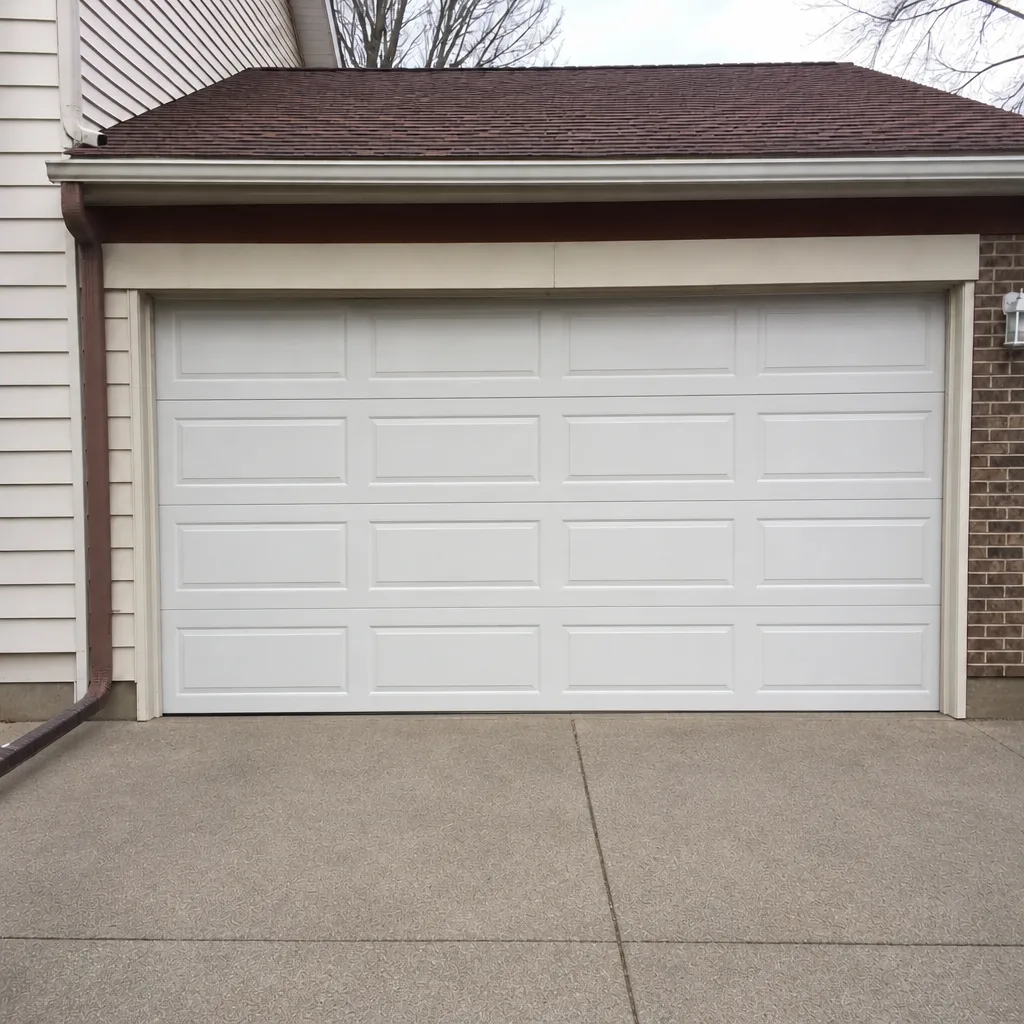 After
 Before
 After
 Before
 After
When to Call a Professional
Notice a sudden change and you can’t pinpoint why? A spring is broken, a cable is slack, the door is off track, or the auto-reverse won’t respond – stop using the door and call. If your door is noisy, sluggish, or out of balance in a way you’ve been meaning to look at for months, this is the month to look. And if the door won’t close, won’t open, or the door is doing something visibly wrong when you cycle it, that’s an urgent call, not a wait-and-see. The technicians who serve Burke have up to 12 years of experience across LiftMaster, Chamberlain, Genie, Clopay, Amarr, Wayne Dalton, Craftsman, and Raynor equipment, so whether you have a well-loved older opener or a newer model, we work on the brand you already have. Burke Garage Door Repair Pros offers free estimates in Burke – call (888) 340-6306. If it’s after hours or on a Sunday and the door won’t close, we’ll book the emergency call and get you back up and running.
Frequently Asked Questions
Monthly for the five-minute safety and visual check, and twice a year for a full lubrication and balance inspection – ideally in March and October for Burke’s climate. The generic “twice a year” advice is a floor, not a ceiling. The monthly routine is what catches the quiet failures. If you want a professional inspection once a year on top of that, call (888) 340-6306 for a free estimate.
The safety systems: the mechanical auto-reverse and the photo-eyes. Both can fail silently, and a failure means someone could be hurt. Test them monthly. Next most important is the balance – a door that won’t stay at halfway needs professional attention. Call (888) 340-6306 if either test fails.
Not necessarily, but noise is always a signal. A rhythmic thump suggests a worn roller; a squeak suggests a dry hinge; grinding suggests grit in the track. None of those are emergencies, but all are cheap to fix now and expensive to ignore. If the door is loud and you’re not sure why, a professional look is worth the call – estimates are free.
Yes, for the rollers, hinges, and track. A light spray on the pivots and stems is fine and won’t cause problems. But never touch the springs or cables, and don’t add heavy grease to the track – too much attracts grit. If you’re not sure which parts are which, call (888) 340-6306 and we’ll walk you through it.
Not until you’ve ruled out the door. A door that’s out of balance or has a failing roller will make any opener struggle. Test the door’s balance first. If the door is fine and the opener is still struggling – or the safety systems no longer respond – it’s a genuine replacement conversation. Get an honest read on the door and opener together. Call (888) 340-6306.
Yes, more than most homeowners realize. Burke’s humid summers soften seals and encourage rust, and the freeze-thaw cycle of winter stiffens hinges and stresses springs. The seasonal schedule above is built around those specific pressures. If your door has survived a winter without a check, spring is the time.
No. Every quote is written and agreed before any work starts, so you know the number before the technician touches the door. That’s the commitment. Estimates are free, and the written quote is the price. Call (888) 340-6306 for yours.
The Bottom Line
Maintenance on a garage door is mostly about knowing your door’s baseline and noticing when it drifts. The quiet failures – seal, rollers, cable slack – cause the most expense precisely because nothing announces them. So use this checklist: establish the sound and feel, walk around monthly, test the safety systems every time, lubricate on a Burke-weather schedule, and never touch the springs or cables. Do that and you’ll spot most problems while they’re still small. When the small problem becomes a bigger one, or the door stops behaving normally, call us at (888) 340-6306 for a free estimate; we work on whatever brand and system you already have.
If you’re looking for a starting point or a full-service garage door specialist for the work beyond this checklist, Burke Garage Door Repair Pros has the team and the tooling to handle it.
Written by the team at Burke Garage Door Repair Pros.