Last updated November 23, 2026
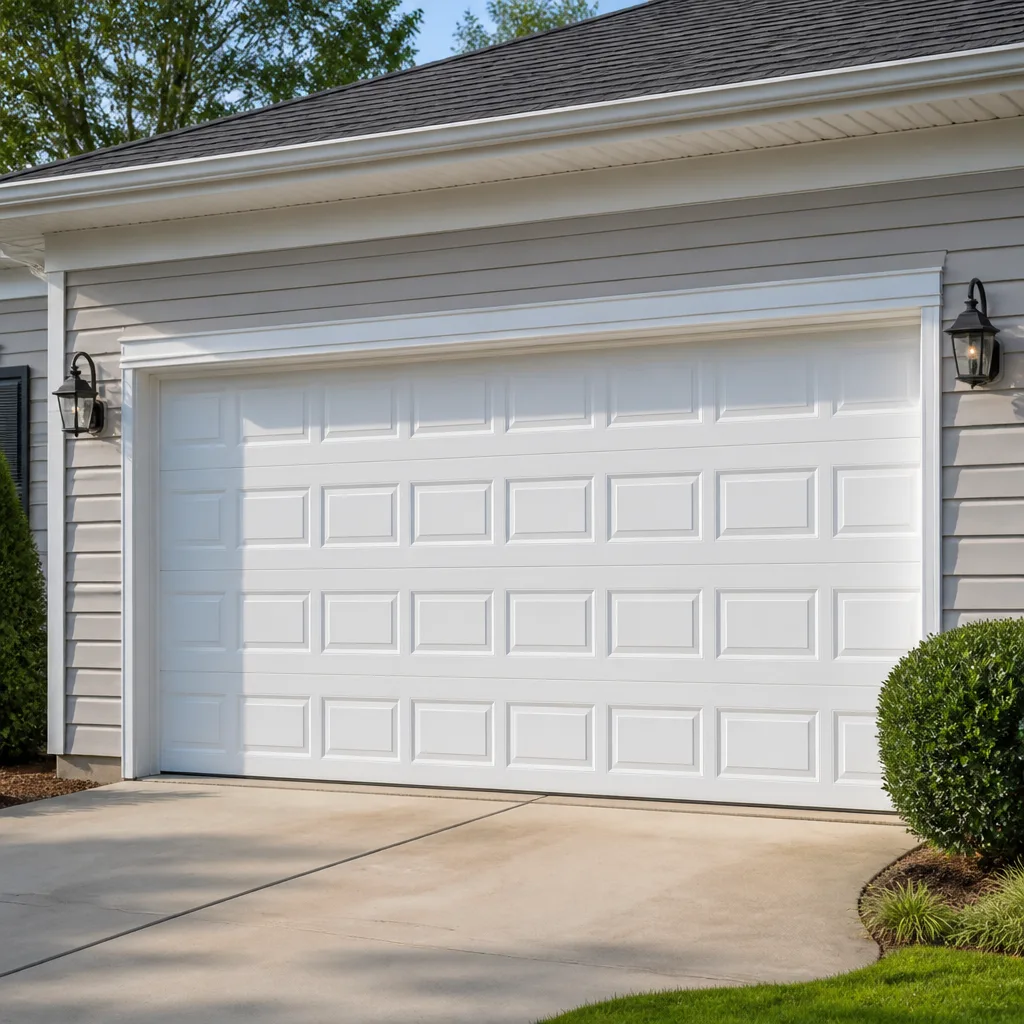 Raised-panel steel
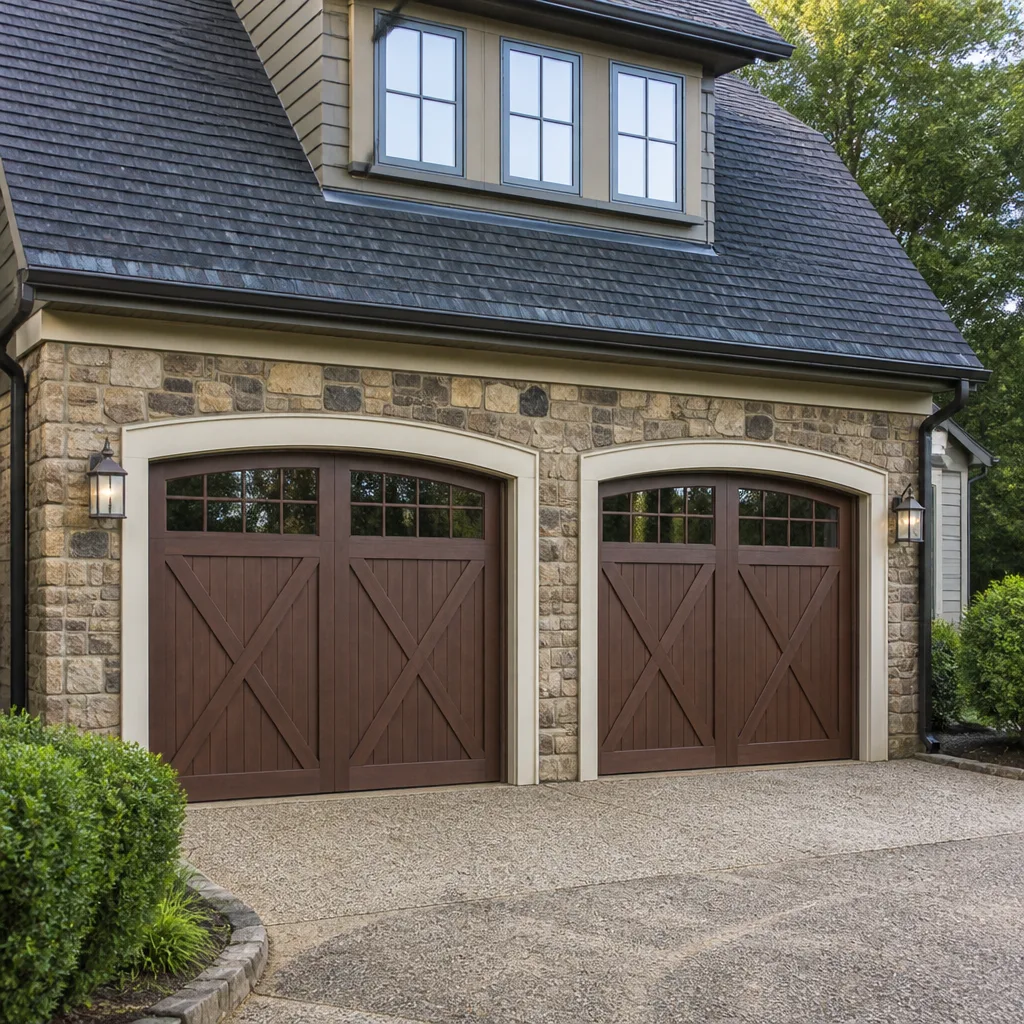 Carriage house
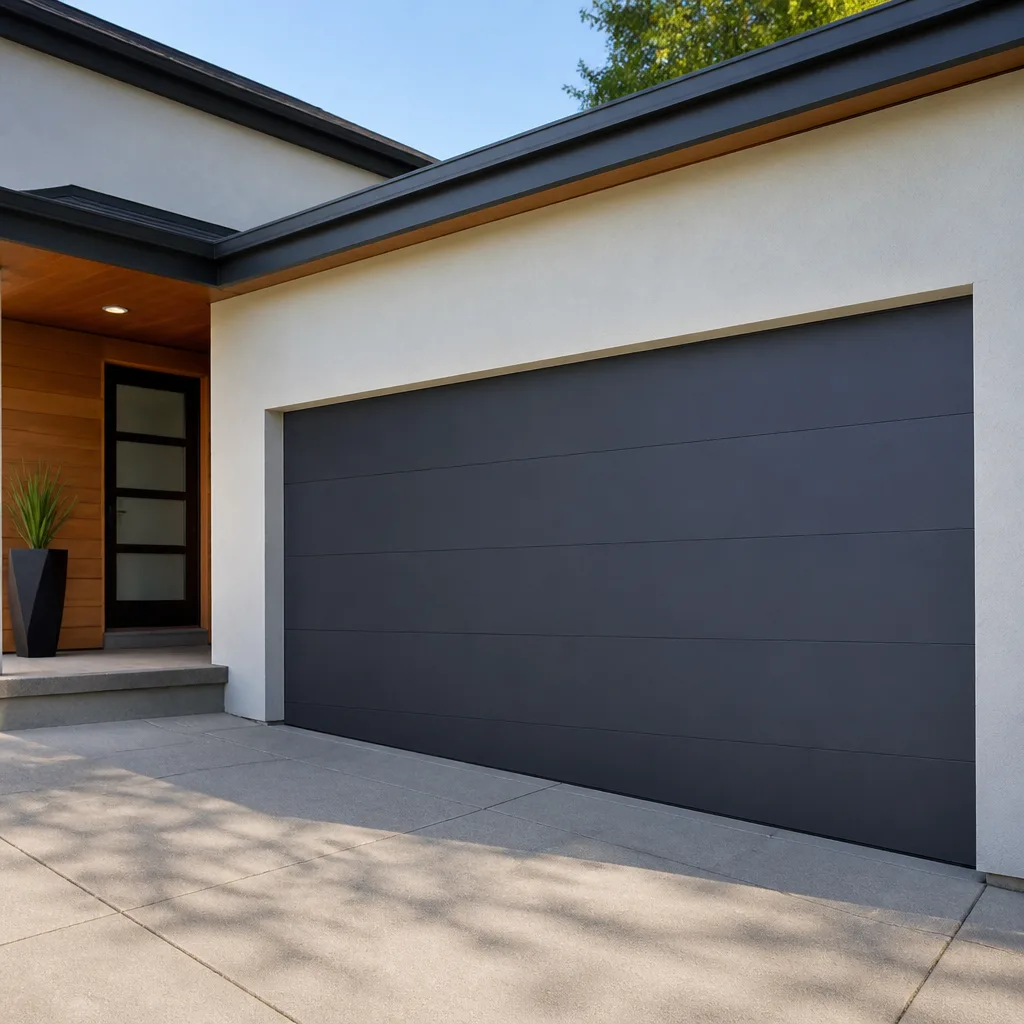 Modern flush
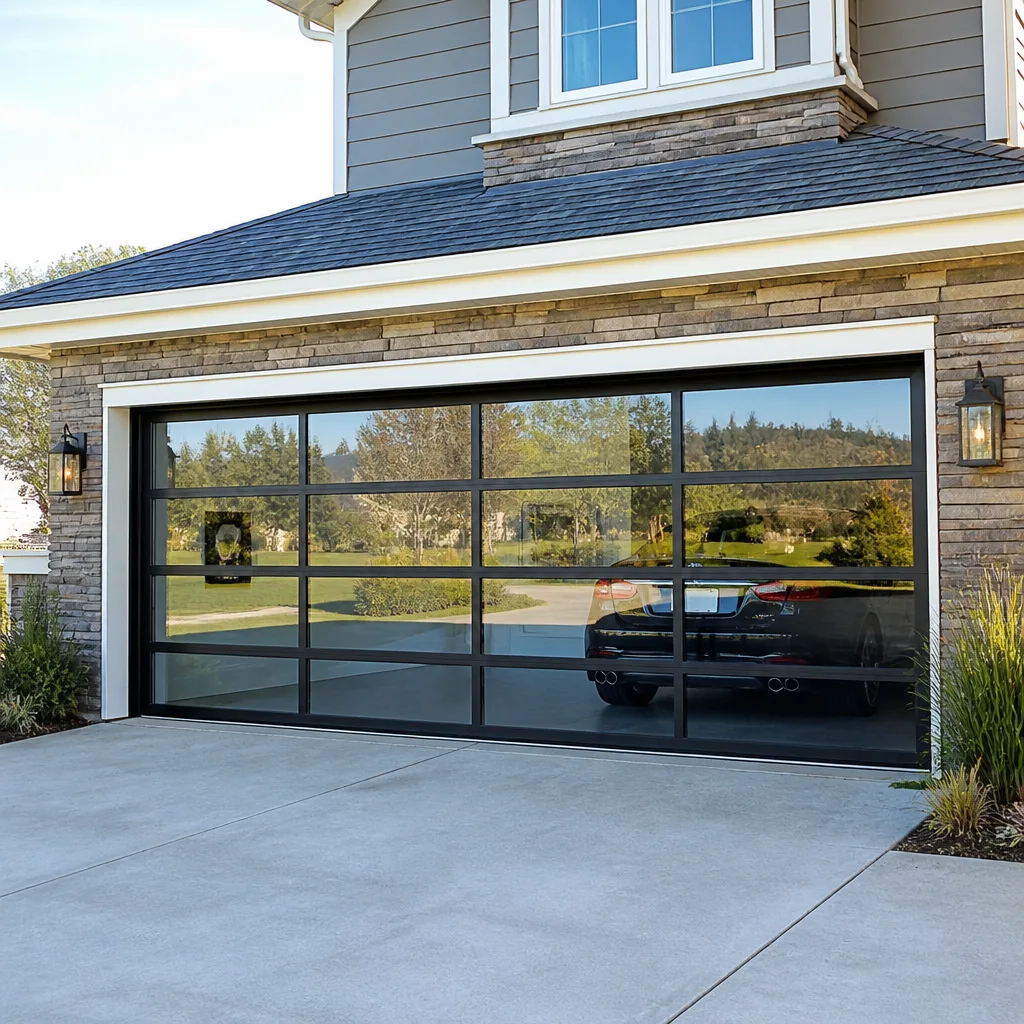 Full-view glass
 LiftMaster openers
 Chamberlain openers
Full 25-point door and opener safety check with every visit - springs, cables, rollers, tracks, and your LiftMaster or Chamberlain opener included
You get a price before we start. It does not change when the pro arrives.
Get your free estimateGarage Door Warning Signs: A Burke Homeowner’s Reference Guide
A garage door rarely fails without announcing itself first. The trouble is that most homeowners have no reference for what the early signals mean mechanically, so they wait. A door that takes three seconds longer to open than it did six months ago isn’t aging gracefully. It’s telling you that spring tension is dropping, rollers are binding, or the opener is compensating for a mechanical problem it won’t be able to compensate for much longer. This guide gives you that missing reference. You’ll learn what each sound, sight, and behavior points to, which warnings mean call today, which can wait for a scheduled appointment, and how to describe a problem so the right parts arrive on the first visit. Burke Garage Door Repair Pros works on garage doors and openers, nothing else.
Quick Answer
The main warning signs of a failing garage door are unusual noises (grinding, squealing, popping, clicking), visible problems from the driveway (uneven gaps, slack cables, bowed panels), and behavior changes (slow travel, reversing with nothing in the way, shrinking remote range). Signs tied to a broken spring, a frayed cable, or an opener that reverses are same-day safety issues. Squeaks, worn rollers, and fading remotes can wait for a scheduled appointment.
Styles & brands we work with
- Raised-panel steel
- Carriage house
- Modern flush
- Full-view glass
- LiftMaster openers
- Chamberlain openers
Table of Contents
- Sound-Based Warning Signs
- Visual Warning Signs From the Driveway
- Response-Based Warning Signs
- Same-Day vs. Scheduled Appointment
- How to Describe a Warning Sign to a Technician
- What It Typically Costs in Burke
- What You Must Never Inspect Yourself
Sound-Based Warning Signs: What Each Noise Is Telling You
Sound is the earliest diagnostic you have. A garage door in good order makes a steady, low rumble as it travels. Any noise layered on top of that rumble points to a component that’s changing. Since the door is one system, a worn roller can load the opener, and a dried hinge can sound like something far worse. What matters is matching the sound to the part.
Here’s how we read the four noises homeowners describe most often in Burke:
- Grinding. Usually metal-on-metal contact. Most often worn or flat-spotted rollers, dry hinges, or a torsion tube that’s binding in its bearings. A short grind at the start and stop is common as rollers wear; a grind that continues the whole travel is louder and gets worse faster.
- Squealing. Typically a lubrication or friction issue: dry rollers, dry hinges, or a torsion spring that has lost its coating. Squealing is rarely urgent on its own, but it accelerates wear on everything it touches.
- Popping. A sharp pop at the start of travel, or a pop partway up, is the one we take most seriously. It can be a torsion spring that’s starting to fail (the coil slipping as it loses tension), a loose torsion drum, or a loose hinge. A pop that repeats in the same spot each cycle deserves a scheduled inspection rather than patience.
- Clicking. Often electrical or opener-side: a relay in the opener, a limit switch, or the wall control. Clicking paired with the door not moving is an opener diagnosis, not a door one.
Because we work on the brand you already have, our technicians recognize the typical mechanical signature of a LiftMaster operator versus a Genie or a Craftsman unit before the door even finishes a cycle. That saves time on the first visit and points to the right parts. If the sound is paired with a door that won’t move at all, that’s when garage door repair happens fast, and it’s exactly the situation our emergency garage door service is built for, from snapped springs to doors that won’t close.
Visual Warning Signs You Can Spot From the Driveway
Not every failure announces itself with sound. Some of the clearest warnings are things you can see without touching anything, and a driveway walk-around once a month catches most of them. Stand back, watch the door through a full open and close cycle, and look for these three things.
- Gap asymmetry. Watch the gap between the bottom of the door and the floor as it closes. If the gap narrows on one side before the other, or if one corner touches down while the other still shows daylight, the door is out of balance. That is usually torsion or extension spring tension, sometimes a bent track. An unbalanced door puts a heavy load on the opener and is a safety issue, not just a cosmetic one.
- Cable slack. With the door fully closed, look at the cables running along the vertical track on each side. They should be taut. A cable that sags, looks frayed, or has jumped a drum is a same-day call. A slack cable can whip free when the door moves, and that’s a serious injury risk.
- Panel bowing. Sight down each panel from the side. A bowed or dented panel can bind in the track, and the opener will push through the bind rather than stop. Bowing also shows up as a door that rattles or shudders partway through travel. On a Wayne Dalton or Amarr door, panel profile is brand-specific, so panel damage is one reason homeowners ask us about garage door installation rather than a patch job.
You’ll also want to note the state of the weather seal at the bottom. Cracking there lets water and cold air in, and in Burke’s summer storms that moisture finds its way onto the track and floor, which accelerates roller wear. Weather seal isn’t a safety item, but it’s the cheapest thing on this list to fix before it causes a bigger problem.
Response-Based Warning Signs: When the Door Behaves Differently
Behavior changes are the ones homeowners most often dismiss, because the door still “works.” It opens, it closes, so what’s the problem? The problem is that a garage door is a balance system. The springs lift most of the weight, and the opener is supposed to add only the last bit. When the springs lose tension or the rollers bind, the opener starts doing work it wasn’t designed to do, and it wears out faster or trips a safety device.
Watch for these response-based signals:
- Slower travel speed. If the door now takes noticeably longer to open or close than it used to, the balance is off. This is the single most underreported warning sign we hear from Burke homeowners. A door that used to open in a few seconds and now crawls is telling you about dropping spring tension or binding rollers.
- Reversing without obstruction. A door that goes partway down and then reverses on its own is a safety issue. It can be a misaligned safety sensor, a limit setting that’s drifted, or an opener force setting that’s overwhelmed by a binding door. Until it’s diagnosed, treat the door as unpredictable and keep an eye on it.
- Inconsistent remote range. A remote that used to work from the end of the driveway and now only works from ten feet away is usually an opener-side signal: a weak battery (start there), an antenna wire that’s been knocked loose, or a logic board that’s aging. If yours is a LiftMaster or Chamberlain, the antenna is usually a simple wire at the back of the motor head, and it’s worth checking before assuming a bigger opener problem.
- Stopping partway and going back to the top. This is often a travel limit or a force setting on older openers, and it’s a classic sign that the door is binding or the spring is weak.
If the door isn’t responding to the opener at all, or it’s stuck partway with the car inside, that’s a job for same-day service, and our garage door opener repair team can usually tell you over the phone whether it’s the opener or the door. When it can’t wait, the door is a security risk and the fix should happen the same day.
Same-Day vs. Scheduled Appointment: Which Warning Signs Can’t Wait
Some warnings tolerate a scheduled appointment. A few don’t, and the difference is safety and security, not convenience. Here’s how we sort them.
Signs that need same-day attention:
- A bang or pop followed by a door that won’t lift, or lifts crookedly. That’s a broken torsion spring, and it’s a safety hazard, not a nuisance.
- A door that won’t close or stays open, leaving the garage unsecured.
- A cable that’s slack, frayed, or off its drum.
- An opener that reverses or a door that comes down fast and hard.
- A door that’s off its track after a bump, and is now jammed at an angle.
Signs that can wait for a scheduled appointment:
- Squeaks and grinding that come and go, with no change in how the door opens.
- Noisy rollers or hinges on an otherwise well-balanced door.
- Cracked weather seal or a bottom rubber that needs replacing.
- Inconsistent paint or rust on a panel, where the door still works smoothly.
The one to watch carefully is slow travel. It isn’t an emergency today, but it’s the leading indicator of a balance problem that puts strain on the opener. Have it looked at before the opener gives out, because opener replacement is a bigger job than a spring adjustment.
How to Describe a Warning Sign Accurately (So the Right Parts Arrive)
When you call, you’re not just booking a visit; you’re helping the technician decide what to bring. A vague “my door is broken” gets a general visit. A precise description gets a focused one. Here’s a short list of what to have ready, based on the warning signs above.
- Say which component you hear or see. “The noise is coming from the top of the door, near the spring” tells the tech it’s a torsion issue. “It’s coming from the motor head” says opener.
- Describe the timing. Does it happen at the start of travel, partway up, near the close, or all the way through? The timing narrows the cause faster than the sound itself.
- Describe the door’s behavior. Does it lift evenly? Does it reverse? Does it stay up? Note whether the door has always done this or started recently.
- Name the door and opener brands if you can. Look for a label on the door’s bottom panel and on the opener’s motor head. Our technicians have up to 12 years of experience and work on Amarr, Wayne Dalton, Craftsman, Raynor, and other major brands, so the label lets us match the right heavy-duty parts and the right spring sizes on the first trip.
- Note the door type. Sectional vs. one-piece, single vs. double car, insulated or not. This matters for panel and spring selection.
- Say how long the issue has been going on. “A few days” vs. “a few months” changes the diagnosis, because wear compounds.
This is also where the technician’s first question usually lands: have you been driving in through the gap in the past week? A door that was pushed through a gap isn’t damaged yet, but it’s a fair warning sign that the door’s balance is off enough for the opener to force it.
What It Typically Costs in Burke: Warning-Sign Repairs
Most warning-sign repairs in Burke land in the ordinary repair range, not the replacement range. If the spring is the problem, expect roughly $180 to $340 for a single torsion spring, with a matched pair costing about twice that. Opener repair usually runs around $130 to $280 depending on the part. A tune-up (rollers, hinges, lubrication, and balance) is typically $100 to $180. These are typical estimates, not quotes, and the written estimate you receive sets the final price.
- Single torsion spring replacement: $180 to $340 typical (a matched pair is about double).
- Opener repair (limit, force, or board issue): $130 to $280 typical.
- Roller and hinge replacement (full set): $150 to $260 typical.
- Off-track reset (non-emergency): $120 to $250 typical.
- Weather seal replacement (single car): $90 to $160 typical.
Every job we quote is a written estimate agreed before any work starts. If the technician finds the problem is different from what you described, you’ll hear the revised number and decide before anything happens. That’s the only way we work, and it’s especially true where the price of a spring can vary by door weight and size.
If you’re weighing a repair against a new door, that’s a different conversation. New garage door installation is measured and scheduled, not a same-day fix. We’ll give you a free measure and a written price for that option so you can compare it to the repair cost without a hard sell.
What You Must Never Inspect Yourself (and Why)
There’s one clear line in this entire guide: the springs and cables are not a DIY inspection. A torsion spring stores enough energy to cause serious injury, and a cable under tension can whip free in an instant. Even when the door looks calm and inert, the spring above the door is loaded. A visual check from the floor is fine: look up, look for slack cable or a visibly separated coil. Don’t reach in, don’t try to loosen anything, don’t stick a tool in to see if the spring “moves,” and don’t operate the door by hand to diagnose it.
The same caution applies to opener adjustments. If the door is reversing or hesitating, don’t just dial the force setting up until it stops. The force setting is a safety device, and raising it to force a binding door through its travel masks the real problem while making the door more dangerous. That’s why spring repair is a service we offer as a named specialty: it’s one of the most frequently mishandled jobs in the trade, and it’s the one that most rewards doing it right.
For anything electrical at the opener head, or any adjustment that requires you on a ladder above the door, we’d rather you call us and let a trained technician take it. Our technicians have up to 12 years of experience, and the local pro who comes to you is licensed and insured as their state requires. That’s the standard we set for the work performed on your door.
Common Mistakes to Avoid
- Ignoring slow travel. The most common mistake is waiting for the door to stop working. Slow, halting travel is telling you the balance is off, and it’s cheaper to fix that now than to replace the opener later.
- Lubricating the spring coils. A little garage door lubricant on rollers and hinges is fine, but spraying a torsion spring can mask a failing spring and confuse the diagnosis. If the spring is popping, don’t oil it, call it in.
- Forcing the door by hand. A homeowner who overpowers a stuck door can bend a panel or bend the track. If the door resists, stop and call a technician.
- Raising the force setting. Turning up the opener’s force setting to force a binding door through its travel is the classic shortcut that turns a cheap fix into an opener replacement.
- Replacing a whole door for a dented panel. A single dented panel on an Amarr or Raynor sectional door is often a panel replacement, not a whole-door job. Talk through options before assuming a new door.
- Calling a generalist for a spring. Spring replacement calls for specific tools and training, and a generic handyman shouldn’t be doing it. Our service is garage door specialists, nothing else, and we’d rather be honest about that.
- Waiting until the door won’t close. A door that reverses or reverses without cause can leave the garage open all day, which is a security problem, especially with the car keys inside. Call it the day you notice it.
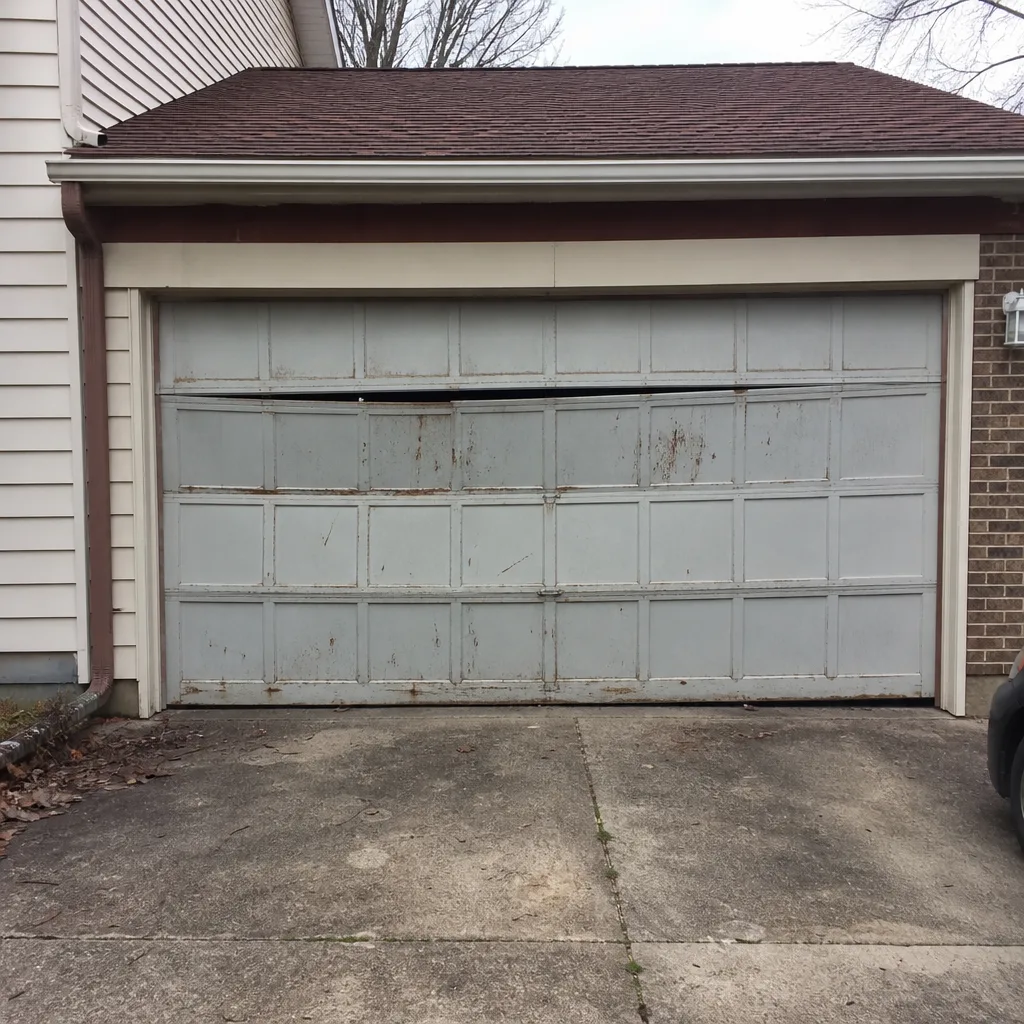
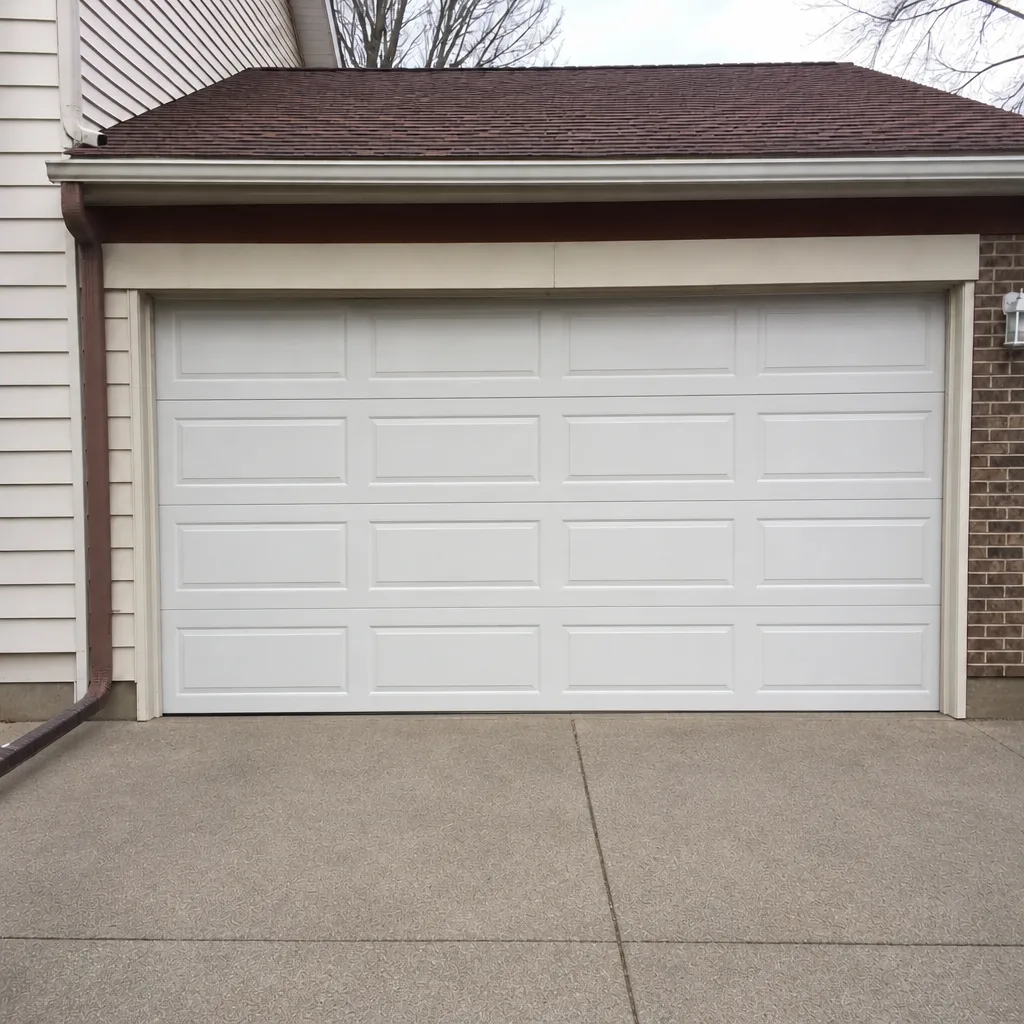
See the difference
 Before
 After
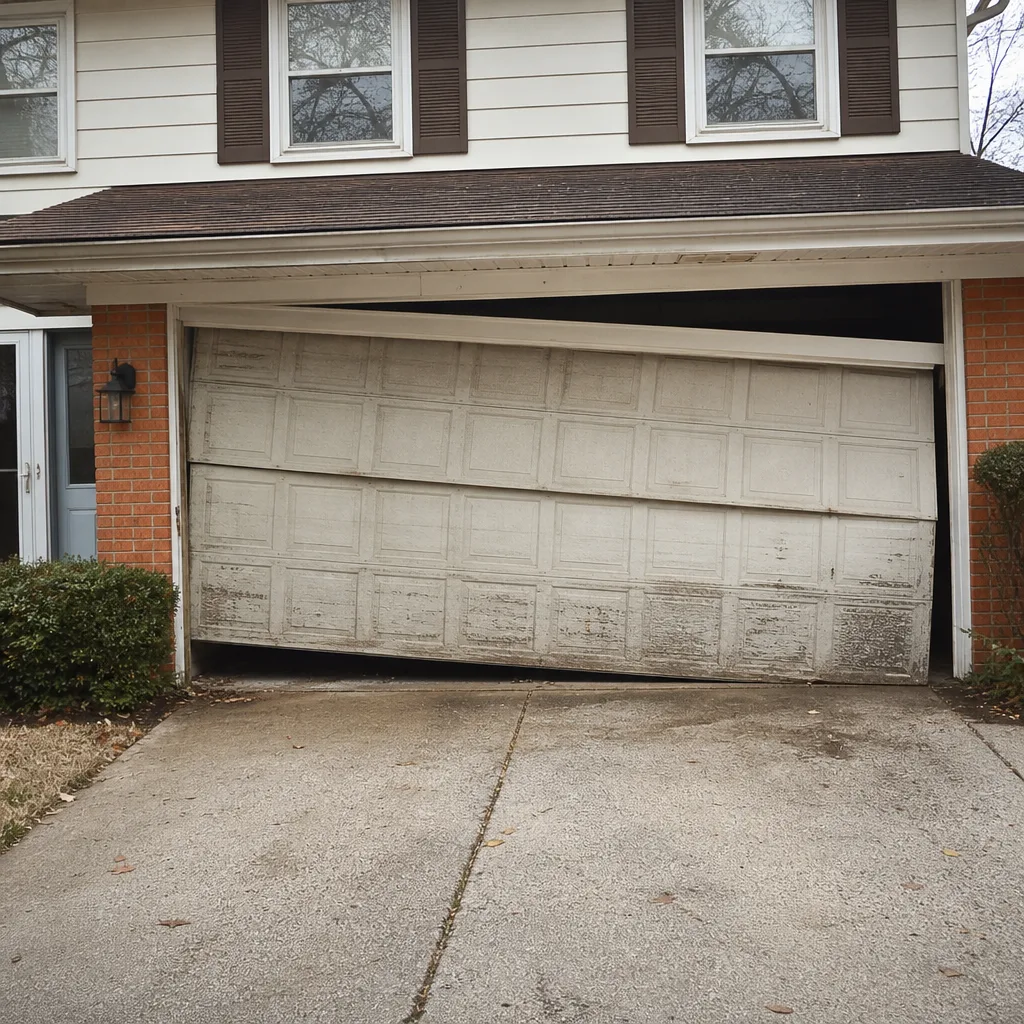 Before
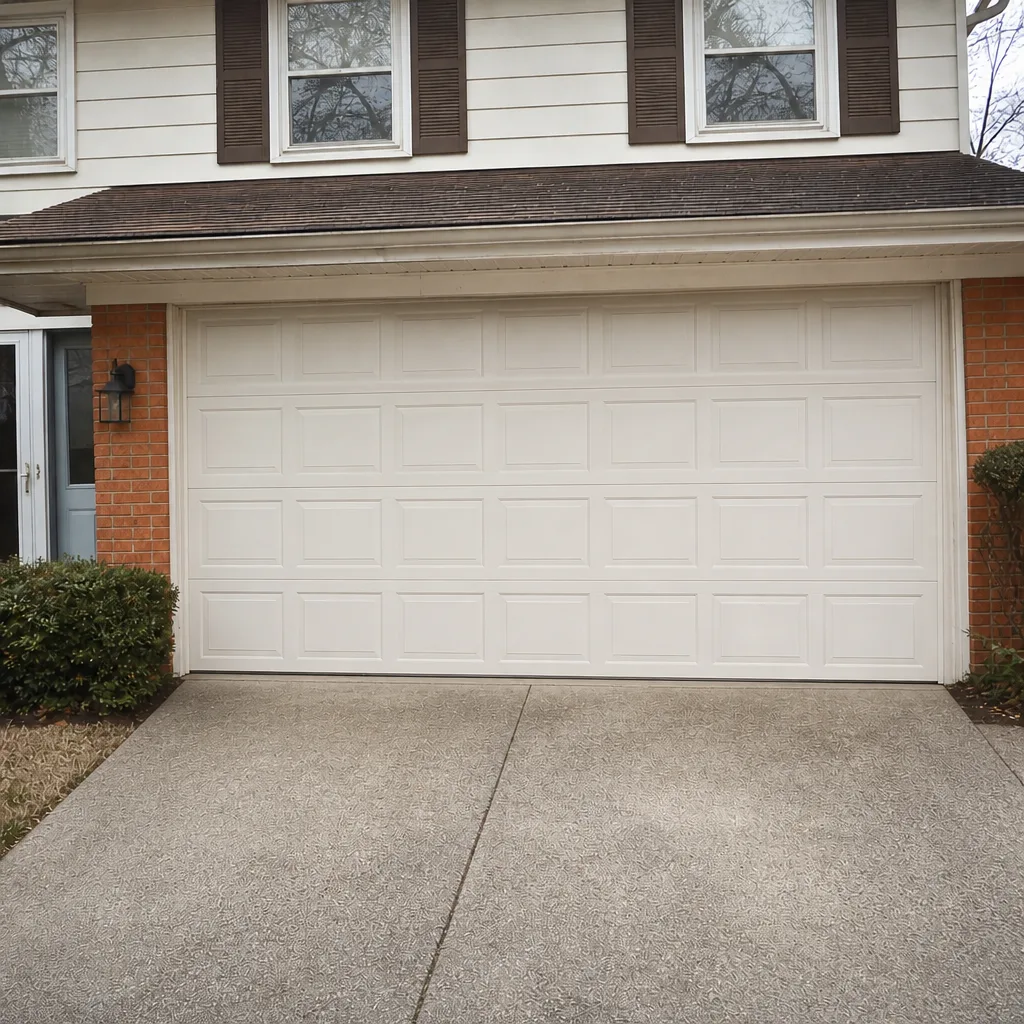 After
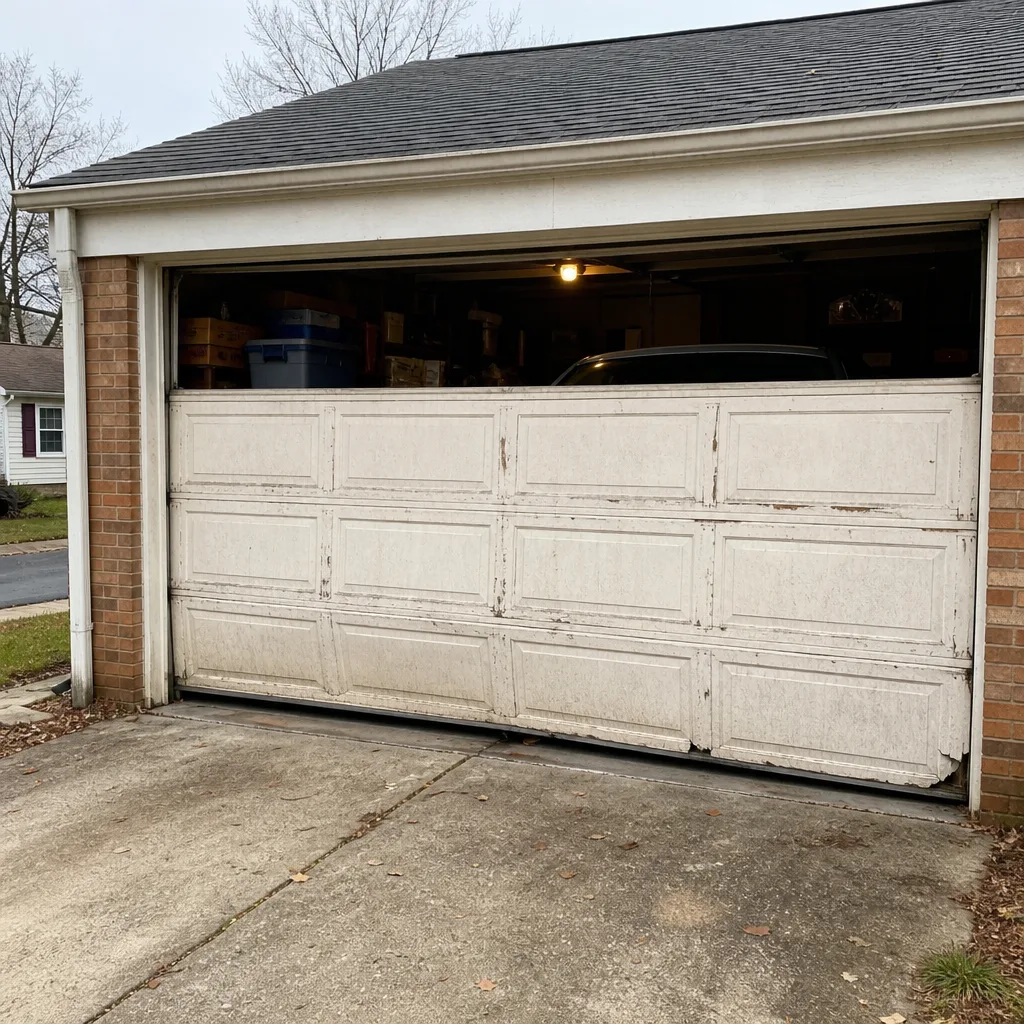 Before
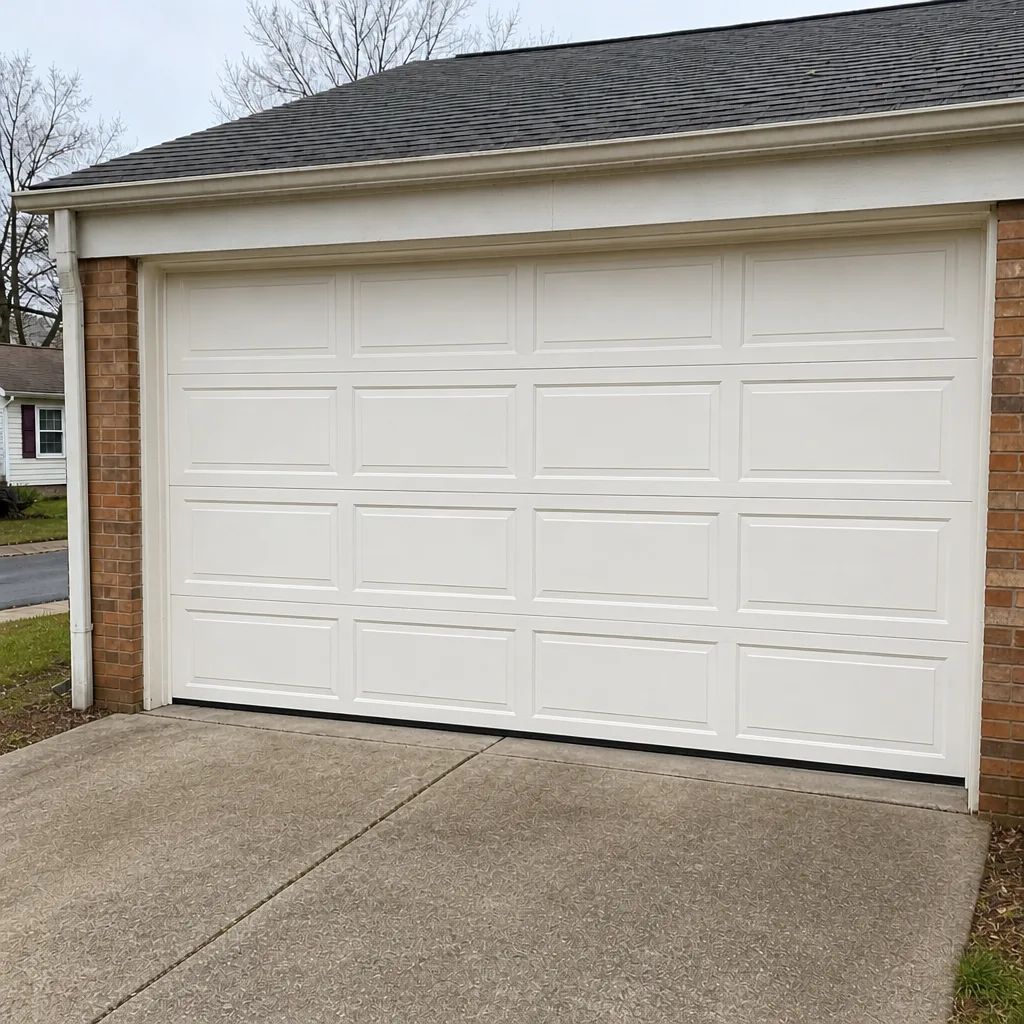 After
When to Call a Professional
Call a professional if you hear a bang or pop followed by a door that no longer lifts evenly, if a cable is slack or frayed, if the door won’t close or reverses on its own, if the door is off its track, or if you see a gap that’s uneven side to side. Any of these is a same-day call, and a trained technician should take it. For slower warnings, squeaks, grinding that comes and goes, a fading remote on a door that otherwise moves well, or a worn weather seal, a scheduled appointment is the right call. If you aren’t sure which category yours falls into, describe the sound, the timing, and the door’s behavior, and we can tell you how urgent it is. Burke Garage Door Repair Pros offers free estimates in Burke. Call (888) 340-6306 for a free estimate.
Frequently Asked Questions
The earliest and most reliable warning sign is a change in travel speed. A door that opens or closes noticeably slower than it did a few months ago is almost always signaling dropping spring tension, binding rollers, or an opener working harder than it should. Call us at (888) 340-6306 for an exact quote on a same-day diagnosis and a written estimate.
A pop that repeats in the same spot each cycle can be a torsion spring losing tension, which is the most dangerous component on the door. Treat it as a same-day safety issue and don’t operate the door if it’s jammed. Call (888) 340-6306 and we’ll get a technician out to assess it.
Yes. Grinding, squealing, and clicking that stay the same for weeks are usually worn rollers or hinges, and the door can stay in use while you schedule a tune-up. But if a noise changes, if the door hesitates, or if it reverses without cause, stop using it and call for repair. Our garage door repair team can advise over the phone; call (888) 340-6306 for a free estimate.
A steady squeak is usually a dry or worn roller and can wait for a scheduled appointment and a standard tune-up. The risk is that the friction wears the rollers flat, which loads the opener. Call (888) 340-6306 to book a tune-up before a cheap fix becomes an opener job.
They shouldn’t. A torsion spring is under high tension, and loosening or adjusting it can cause serious injury. We offer garage door spring repair as a specialty, and the local pro who comes to you is licensed and insured as their state requires. Call (888) 340-6306 for a free estimate and a written price before any work starts.
Tell them the door and opener brands if you can (the door’s label is usually on the bottom panel, and the opener head has a label), whether the noise comes from the top of the door or the motor head, whether it’s a single or double car door, and when the issue started. Our technicians have up to 12 years of experience with brands like LiftMaster, Chamberlain, Genie, Clopay, Amarr, Wayne Dalton, Craftsman, and Raynor, so brand info helps a lot. Call (888) 340-6306 for a free estimate.
The Bottom Line
Most garage door failures give you weeks of warning. The problem is that homeowners have no reference for what those warnings mean, so a squeak, a slow opening, or a small pop gets ignored until the door stops working entirely. Watch the door’s travel speed, listen for changes in the four core noises, and look for uneven gaps, slack cables, and bowing panels from the driveway. Separate the same-day problems from the scheduled ones. And when you describe a warning sign, be specific about the sound, the timing, and the brand. That’s how you keep the door working smoothly and avoid replacing parts you didn’t need to replace. When a warning shows up, the team at Burke Garage Door Repair Pros is ready to get you back up and running.
If you’ve read this guide and recognized your door, don’t wait for a greater failure. Burke Garage Door Repair Pros handles garage door repair, opener repair, spring replacement, and full installation across Burke and the surrounding area. Call (888) 340-6306 for a free estimate, and we’ll get the door working smoothly again.
Written by the team at Burke Garage Door Repair Pros.