Last updated November 23, 2026
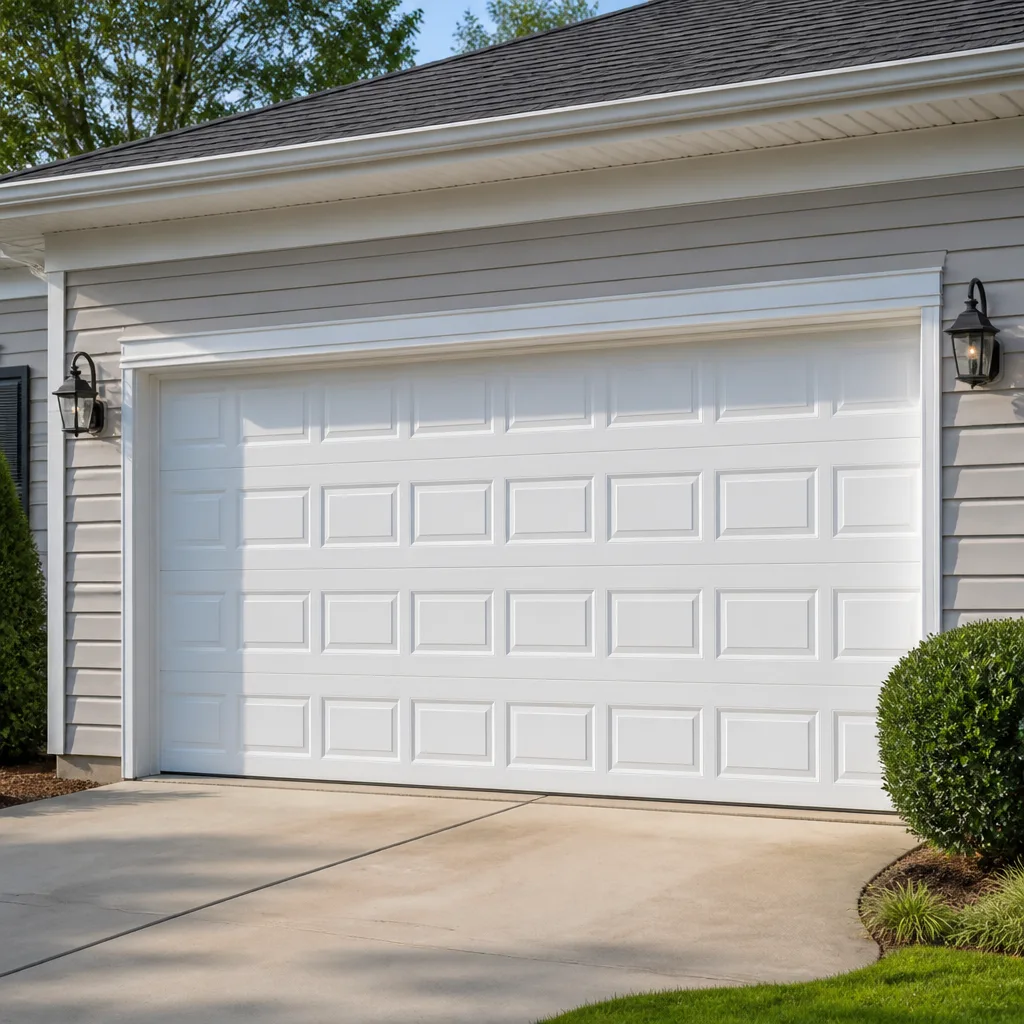 Raised-panel steel
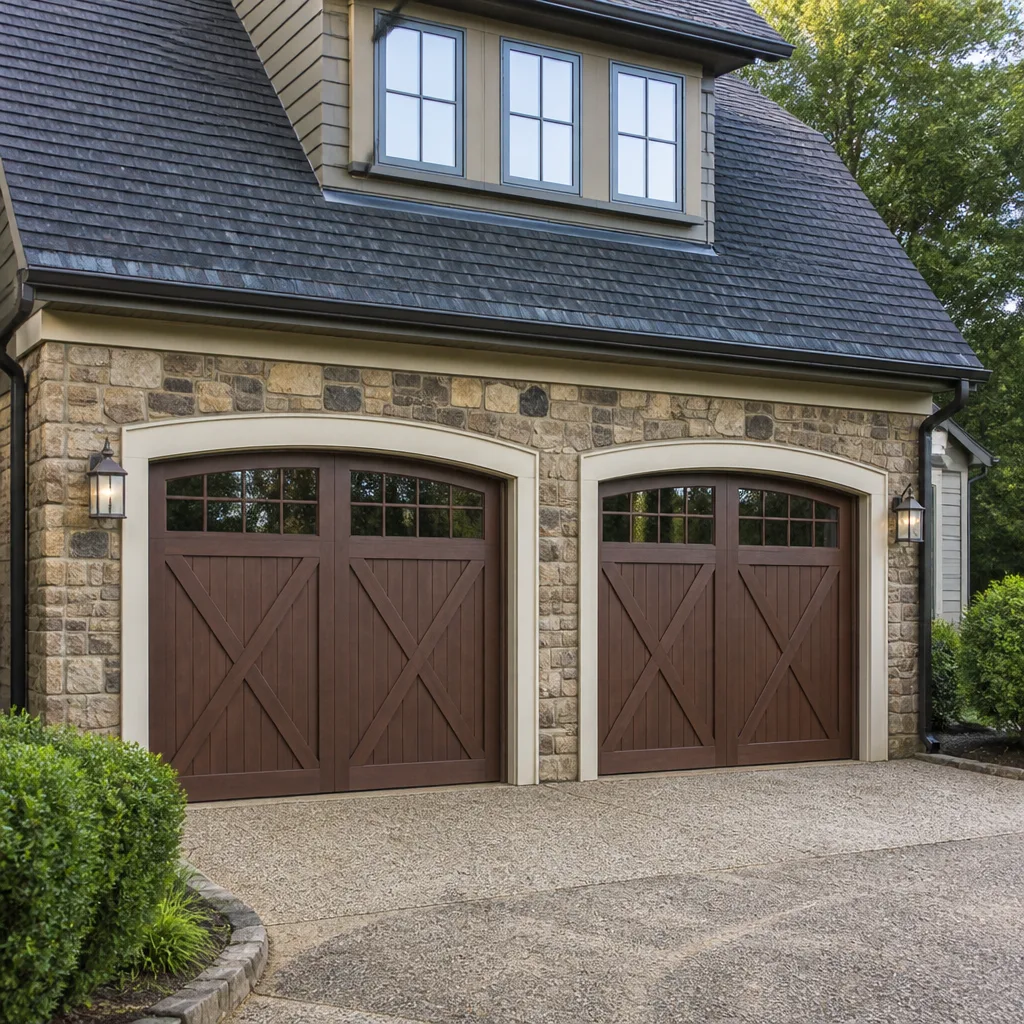 Carriage house
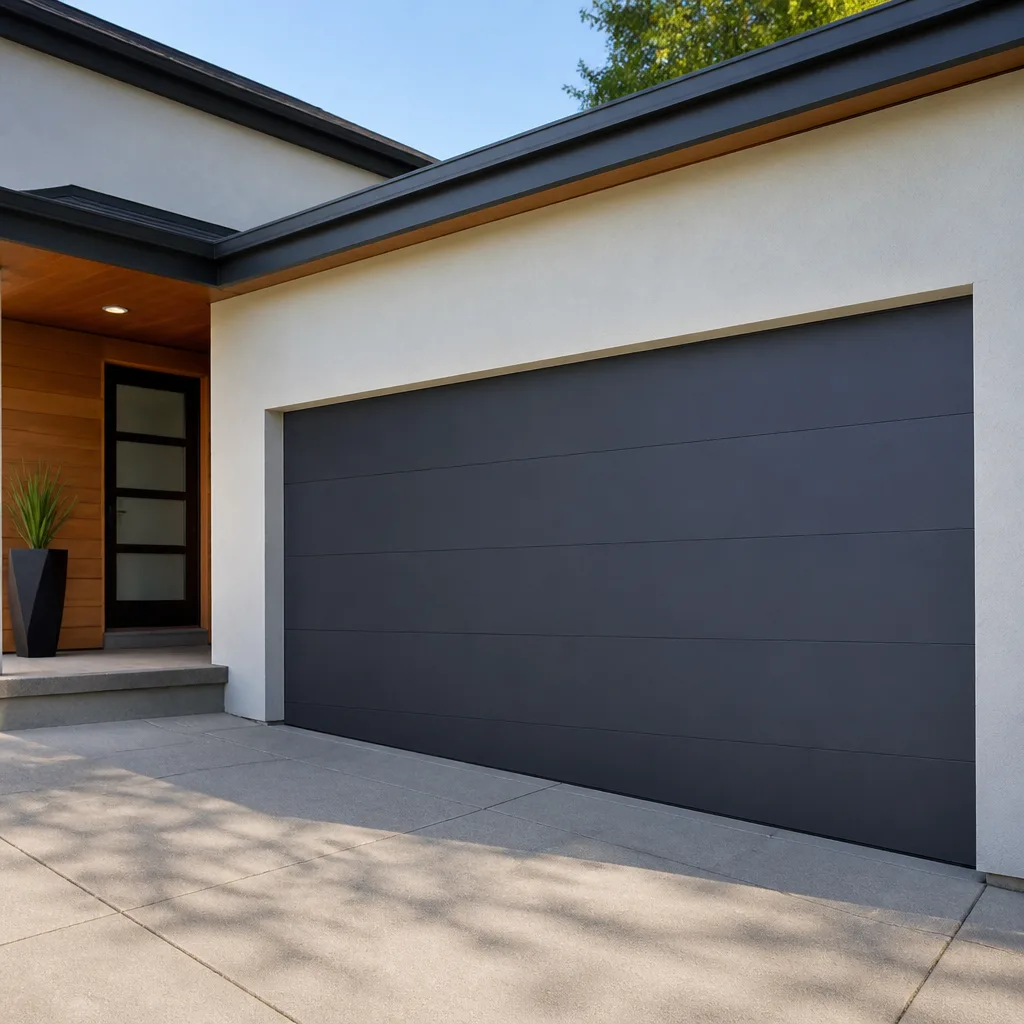 Modern flush
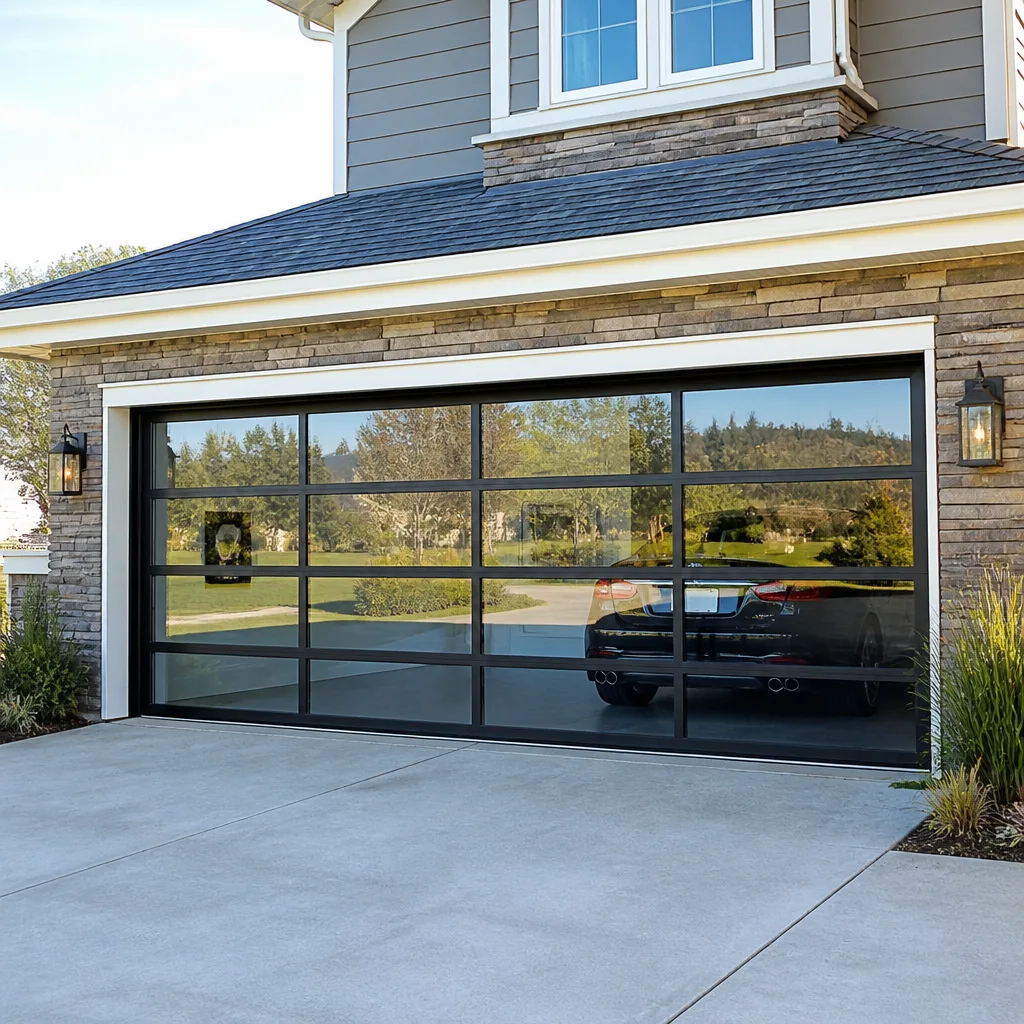 Full-view glass
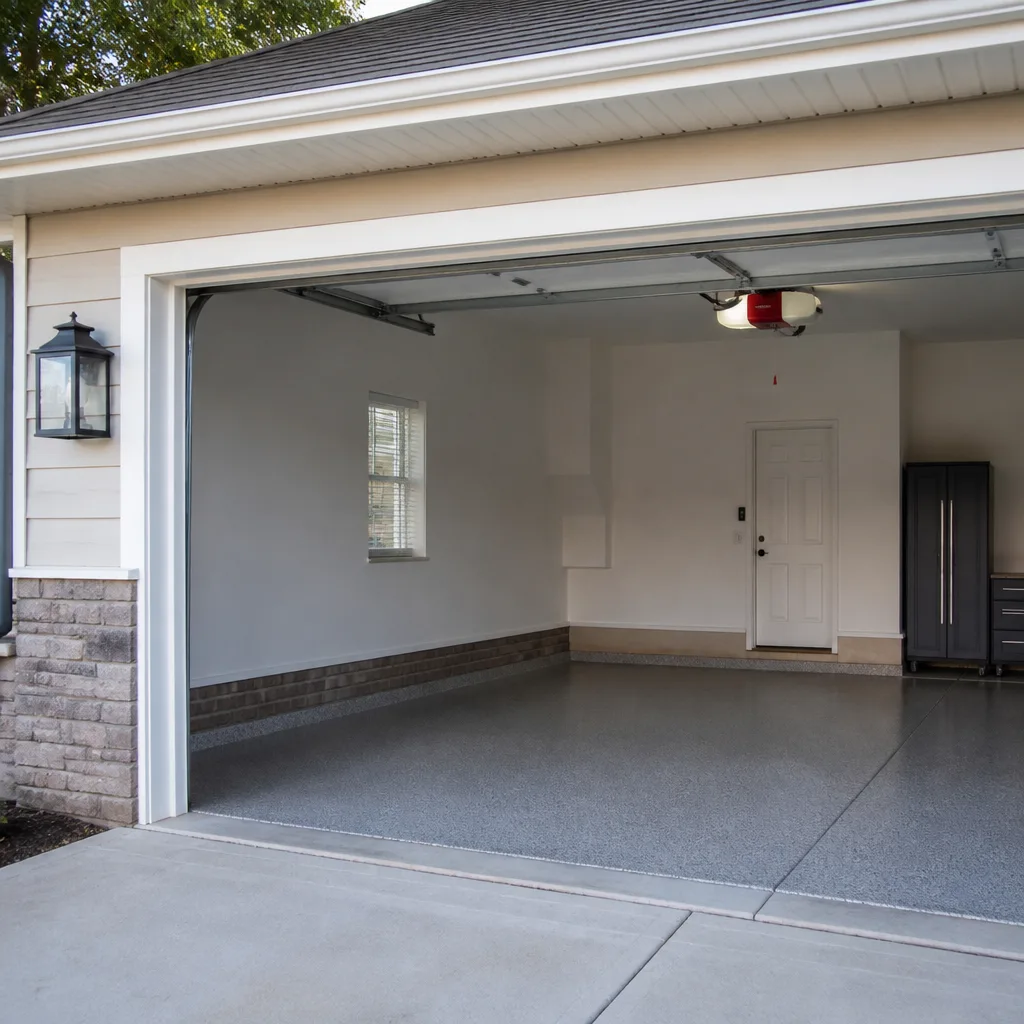 LiftMaster openers
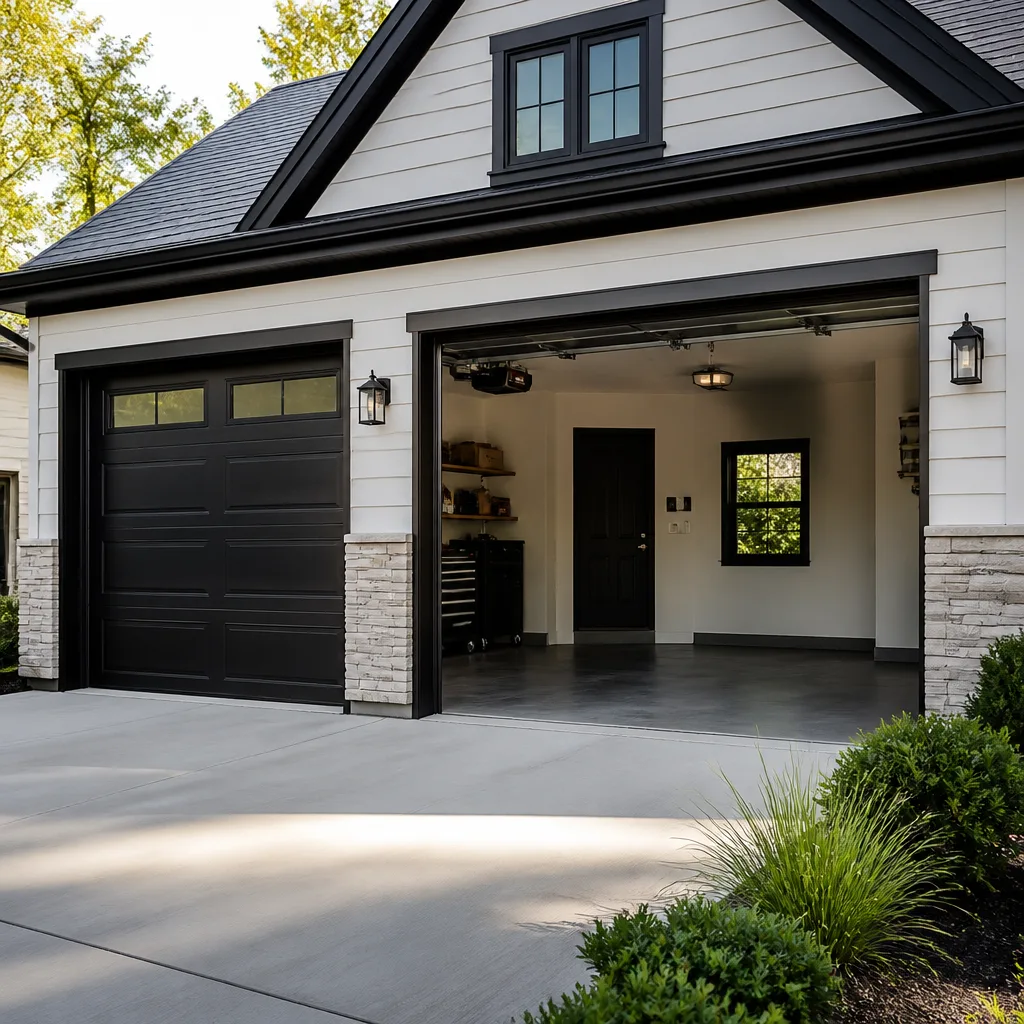 Chamberlain openers
Full 25-point door and opener safety check with every visit - springs, cables, rollers, tracks, and your LiftMaster or Chamberlain opener included
You get a price before we start. It does not change when the pro arrives.
Get your free estimateHow to Hire a Garage Door Contractor in Burke: A Step-by-Step Guide
A five-star review can’t tell you whether a contractor understands torsion spring wind count, knows your door brand’s warranty terms, or carries the right liability coverage for a job on your property. Those details don’t show up until something goes wrong. Most homeowners screen garage door contractors the way they’d screen a restaurant: price, stars, maybe a gut feeling. The questions that actually predict a good outcome are technical, and almost nobody asks them. This guide walks through the screening process we’d use if we were hiring someone for our own Burke home, from verifying a license in under five minutes to reading warranty language that makes a policy unenforceable. You’ll learn what to ask, what the answers should sound like, and the red flags specific to this trade.
Quick Answer
To hire a garage door contractor in Burke, verify the company’s Virginia contractor license and liability coverage before anything else, insist on a written scope of work that names parts and brands, and confirm the company works on garage doors as a specialty rather than a side service. Ask specifically how they handle torsion springs and warranty terms on parts and labor. A fair price with a vague scope is a worse deal than a higher price with a clear one.
Styles & brands we work with
- Raised-panel steel
- Carriage house
- Modern flush
- Full-view glass
- LiftMaster openers
- Chamberlain openers
Table of Contents
- Step 1: Verify the License and Insurance Before You Talk Price
- Step 2: Get a Written Scope of Work, Not a Verbal Quote
- Step 3: Confirm They Specialize in Garage Doors
- Step 4: Ask the Spring Questions
- Step 5: Test Brand and Opener Knowledge
- Step 6: Watch for Garage-Door-Specific Red Flags
- Step 7: Read the Warranty Language Carefully
- Questions to Ask on the Phone
Step 1: Verify the License and Insurance Before You Talk Price
Virginia requires contractors to be licensed through the Department of Professional and Occupational Regulation, and the verification takes minutes if you know where to look. Ask for the company’s license number and the name it’s registered under, then check both against the state’s online license lookup. If the name on the license doesn’t match the name on the estimate, ask why before you go further.
Insurance is the second half of the check. A garage door job involves heavy springs under extreme tension, sharp tracks, and doors that can weigh hundreds of pounds. If something goes wrong and the contractor isn’t insured, the problem lands on your homeowner’s policy. Ask for a certificate of insurance showing general liability coverage, and call the number on the certificate to confirm it’s current. A legitimate company won’t hesitate on either request.
Here’s the sequence we’d use, in order:
- Ask for the license number and the exact registered business name.
- Look both up in Virginia’s contractor license database and confirm the classification covers the work.
- Request a certificate of insurance for general liability.
- Call the insurer listed on the certificate to confirm the policy is active and the dates are current.
- Confirm the name on the certificate matches the name on your estimate.
If any of those five steps stalls, that’s your answer. Move on. In Burke, where a lot of homes were built across several decades with a mix of original and replacement doors, a contractor who can’t produce paperwork is one you don’t want working on your property.
Step 2: Get a Written Scope of Work, Not a Verbal Quote
A verbal quote covers the price and nothing else. A written scope of work is the document that protects you when the job is half done and the conversation turns to what was “included.” It should be specific enough that two different technicians reading it would arrive at the same conclusion about what needs doing.
At a minimum, your written scope should include:
- Exact parts being replaced, by name and specification. Not “springs” but “two torsion springs, matched pair, rated for the door’s weight and height.”
- Brand names where a part or opener is being supplied. If your door is a Clopay or Amarr and the replacement panel is something else, the scope should say so.
- Labor included, spelled out. Does the price cover removal and disposal of the old parts? Adjustment after install? A final balance check?
- What’s explicitly excluded, so there’s no surprise add-on later.
- The final price and how it’s calculated. Per spring? Per panel? Flat labor plus parts?
- Warranty terms for both parts and labor, written out rather than summarized verbally.
- The company’s name and license number on the document itself.
The write-up should say plainly that the price is quoted and agreed before any work starts. If the contractor’s scope uses language like “springs” without a count, “opener repair” without naming what’s being replaced, or a total price with no breakdown, ask them to itemize. A company that can’t explain the line items probably doesn’t plan to. For a job like garage door repair, the scope should tell you exactly what fails, what replaces it, and what it costs to put your door back in working order.
Step 3: Confirm They Specialize in Garage Doors
Plenty of contractors will “also do” garage doors. General handyman services, remodeling outfits, and even some fencing companies list garage door repair on the side because a snapped spring looks like an easy upsell. The problem is that the trade has its own tools, its own knowledge base, and its own risk profile. A contractor who installs trim most of the week and changes springs once a month is not the person you want working under a loaded torsion system.
You can usually tell in a two-minute conversation. Specialists will have a clear answer to brand-specific questions, know which openers pair with which doors, and can tell you the difference between a torsion spring and an extension spring without pausing. Generalists will answer with vague competence (“we handle all of that”) and steer the conversation back to price.
Some questions that separate the two:
- What percentage of your work is garage doors? (A specialist can answer without hedging.)
- Do you work on the brand I already have? (Check with lift-master, Chamberlain, Genie, Clopay, Amarr, Wayne Dalton, Craftsman, or Raynor owners – a true specialist works on the brand that’s installed, not just the brand they’d prefer to sell you.)
- Do you do full installations as well as repairs, or just one side?
- Can you handle opener repair as well as spring repair, or do you send someone else?
In our experience, the specialist answer to “should I replace my whole door?” is usually no, and the generalist answer is often yes. That pattern alone tells you a lot about who’s being paid for what. When it’s time for garage door opener repair, a garage door specialist who knows the opener brand and the door it’s lifting will diagnose the actual failure faster than someone reading a generic manual.
Step 4: Ask the Spring Questions
Springs are where the trade separates the careful from the careless. A torsion spring stores enough energy to cause serious injury when it fails or is handled wrong, and every question you ask about springs is really a question about whether the contractor takes that energy seriously. Start with this one: “How do you determine the right spring for my door?” A good answer involves door weight, door height, cycle life, and the spring’s wire size and inside diameter. A bad answer is “standard spring” or “we’ll match what’s there.”
Follow up with these:
- Are you replacing one spring or the pair? Springs that are installed together wear together. If one has failed, the other is usually close behind, and replacing only one means you’ll be paying for a second service call soon. A fair contractor explains the pair logic and offers both options.
- What cycle life are you quoting? Springs are rated by the number of open-and-close cycles they’re designed to handle. Cheap springs have shorter life. Ask what’s being installed and compare.
- How will you wind the spring? The answer is a count of quarter turns based on door height and spring spec. A contractor who says “you just crank it until it feels right” doesn’t understand the mechanics.
- Do you replace the cables and drums at the same time? Sometimes yes, sometimes no, but the answer should show a technician thinking about the system, not just the failed part.
Here’s where we’ll be blunt: spring replacement is one of the most dangerous jobs in residential home service, and it’s not a DIY project. We don’t publish step-by-step instructions for rewinding a torsion spring because the risk to a homeowner who gets it wrong is serious. garage door spring repair should be handled by trained professionals with the right winding bars, the right safety protocol, and the right insurance. If a contractor offers to talk you through it yourself over the phone, that’s not helpfulness – it’s a liability transfer you didn’t agree to.
Step 5: Test Brand and Opener Knowledge
Your door and opener were probably installed by a builder who chose a specific brand for a specific reason. Whether that’s Genie, Clopay, Amarr, Wayne Dalton, or any of the other major names, a contractor who works on the brand you already have is worth more than one who wants to swap it for their preferred line. Ask what brands they routinely work on. The answer should be a list, not one name.
Test the opener knowledge separately. A garage door opener and the door it lifts are two systems, and the best garage door contractors understand both. Good questions:
- Can you tell me whether my opener’s lifting force is set correctly?
- How do you check the safety reverse feature?
- What do you do if the opener’s remote or keypad works but the wall switch doesn’t?
- If the door is binding or off-track, will you fix the door first or the opener?
Those answers reveal whether the contractor thinks in terms of the whole system. In Burke, where many homes run older openers alongside newer doors (and occasionally the reverse), mismatched force settings and worn rollers can mimic opener failure. A specialist diagnoses the actual fault. A generalist often replaces the opener and finds out afterward that the door was the problem.
Step 6: Watch for Garage-Door-Specific Red Flags
Most homeowners know the general contractor red flags: cash-only, no address, no paperwork. Garage door contractors have their own set, and these are the ones we’d watch for in Burke:
- Vague spring descriptions. “We’ll replace the springs” without a count, spec, or cycle life is a way to substitute cheaper components later.
- Refusal to quote parts separately. If the price is one lump sum and the contractor won’t tell you what the springs cost versus the labor, you can’t evaluate the quote.
- Same-day pressure tactics. “This price is good today only” or “we can only honor this if you sign before we leave” is a sales tactic, not a service. A legitimate quote in the morning is a legitimate quote next week.
- “Your door is unsafe, we need to replace it all.” Sometimes that’s true. Most of the time it isn’t. Ask for the specific safety failure and the specific replacement need.
- No brand knowledge. If you mention Clopay and the contractor shrugs, they’re not a specialist.
- Unmarked vehicles and no printed materials. Every legitimate company in this trade puts its name on the estimate and the invoice.
- Cash-only with no receipt. You want a paper trail on parts and labor, both for the warranty and for any future home sale disclosure.
We’ve also seen the milder version of these tactics: a contractor who quotes “a spring repair” at a low price and discovers on-site that you “need a whole new spring system.” If the estimate on the phone is dramatically lower than any other quote you’ve received, that’s usually a sign the scope is wrong, not that you’re getting a bargain.
Step 7: Read the Warranty Language Carefully
A warranty is only as good as the language that enforces it. Ask for the written warranty on both parts and labor before you commit, then look for the specific terms that make warranties unenforceable:
- “Warranty void if anyone else works on the door.” This is sometimes reasonable, sometimes a way to dodge responsibility. Ask what counts as “work.”
- “Excludes springs and other wear items.” If springs are excluded, the warranty doesn’t cover the most common failure.
- “Labor not included.” A parts-only warranty means you pay the trip charge and labor every time a failing part gets replaced.
- “Warranty applies only to defects in materials.” Which defects? Specified by whom? Get it in writing.
- No term specified. “Warranty included” with no duration is functionally no warranty at all.
A legitimate warranty on a spring replacement should cover both the part and the installation labor for a defined period. A warranty on a new door installation should cover the door, the hardware, and the labor, with a clear process for how to make a claim. If your contractor hands you a one-paragraph warranty on a service order, ask for the full terms before signing. And keep the invoice. When the warranty process depends on the paperwork, the paperwork is the warranty.
Questions to Ask on the Phone
The call itself should be short and specific. You’re not looking for a full quote – you’re looking for whether this contractor is worth a site visit. Here’s the list we’d use:
- Are you licensed in Virginia, and what’s your license number?
- Can you send me a certificate of insurance for general liability?
- Do you specialize in garage doors, or is this one of several services you offer?
- Which brands do you work on?
- How do you handle a broken spring – one, or the pair?
- Do you provide written quotes, and will the price change once you’re on site?
- What warranty comes with parts and labor?
- What’s your emergency service availability?
If the answers are vague, the contractor is vague. If the answers are specific, you’ve eliminated most of the risk in this decision. As a garage door specialist working in Burke, we can tell you that the contractors we respect in this trade answer every one of these questions without pausing. The ones who don’t usually didn’t want you to ask.
Common Mistakes to Avoid
- Choosing on price alone. The low quote is often a scope that wasn’t disclosed. Compare line items, not bottom lines.
- Skipping the license check. Virginia’s contractor database is free and takes five minutes. There’s no excuse for hiring an unlicensed contractor in Burke.
- Accepting a verbal quote. If it’s not written, it’s not agreed. Get every scope in writing before any work starts.
- Replacing the door when the opener is the problem. This mistake runs the other direction too. A specialist diagnoses both systems before recommending a fix.
- Ignoring the second spring. In Burke’s mix of older and newer homes, a matched pair with one broken spring is usually a pair that’s ready to replace. Ask the question before you’re paying for a second callout in a few months.
- Assuming a generalist is cheaper. Sometimes the initial price is lower, and the total cost is higher after two visits and a misdiagnosis. A single-trade specialist tends to get it right the first time.
- Not keeping the paperwork. Your invoice, warranty terms, and insurance certificate are the only protection you have after the contractor drives away. Store them with your home records.
See the difference
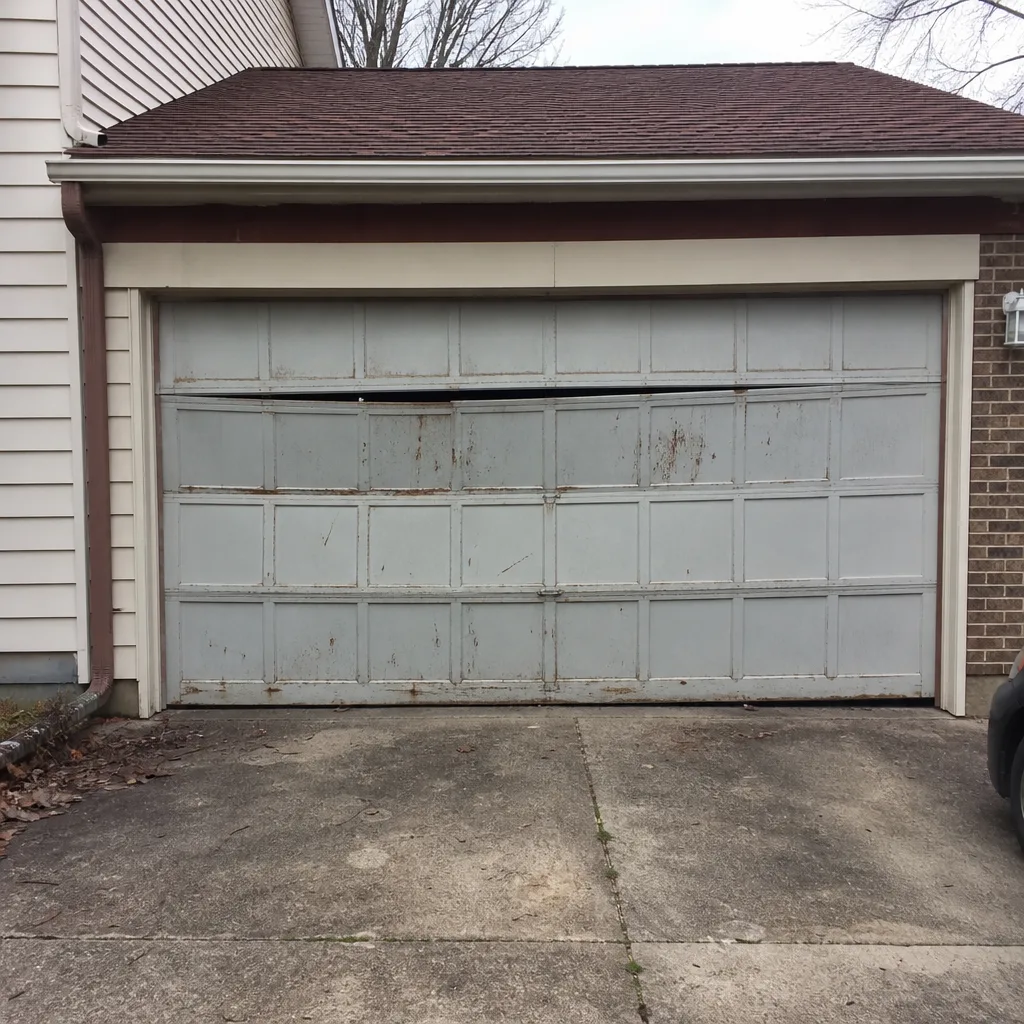 Before
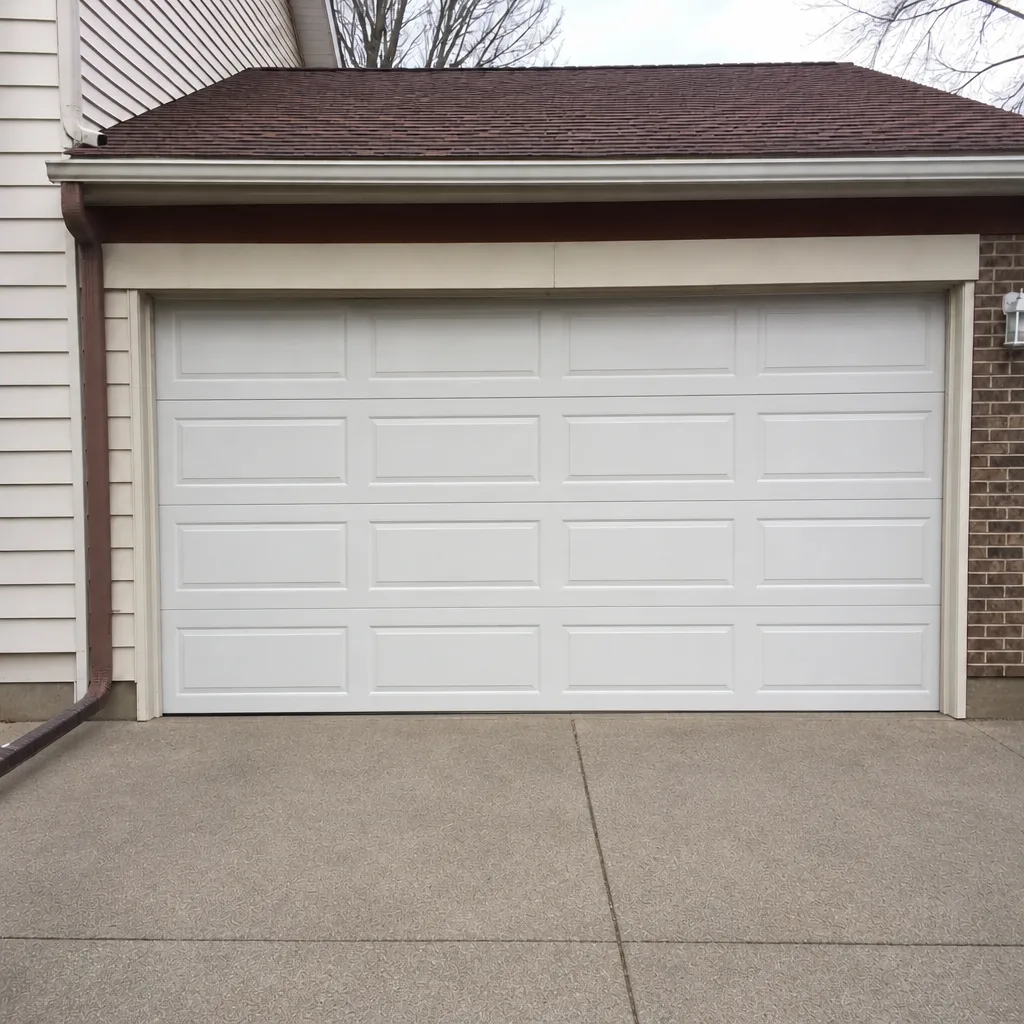 After
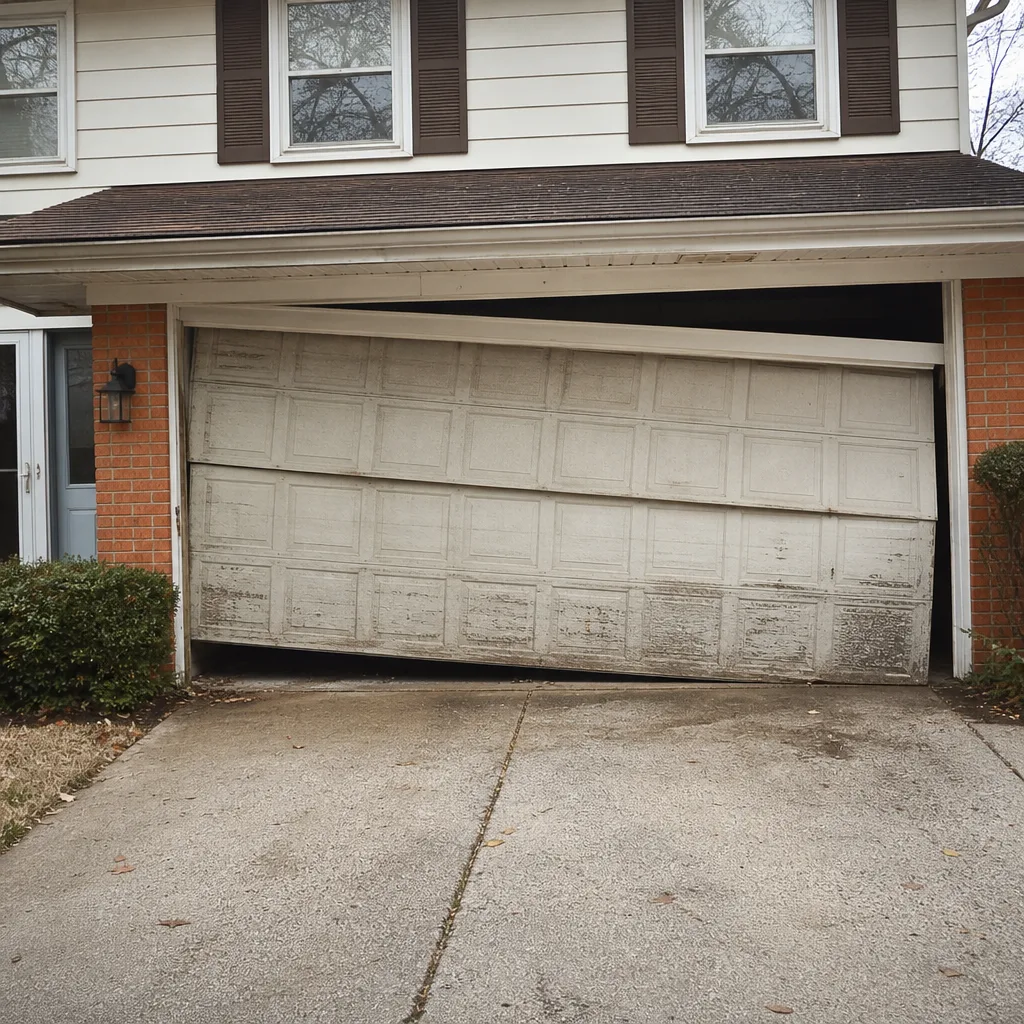 Before
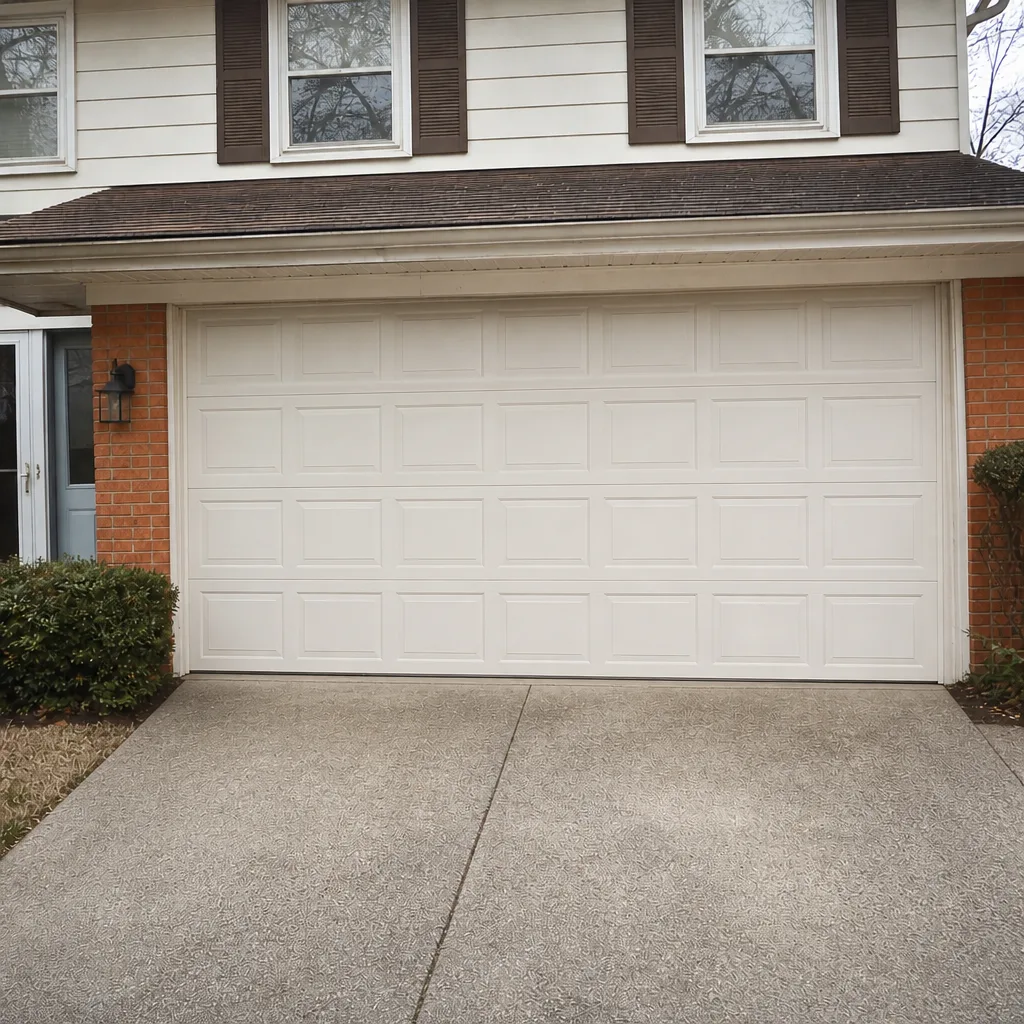 After
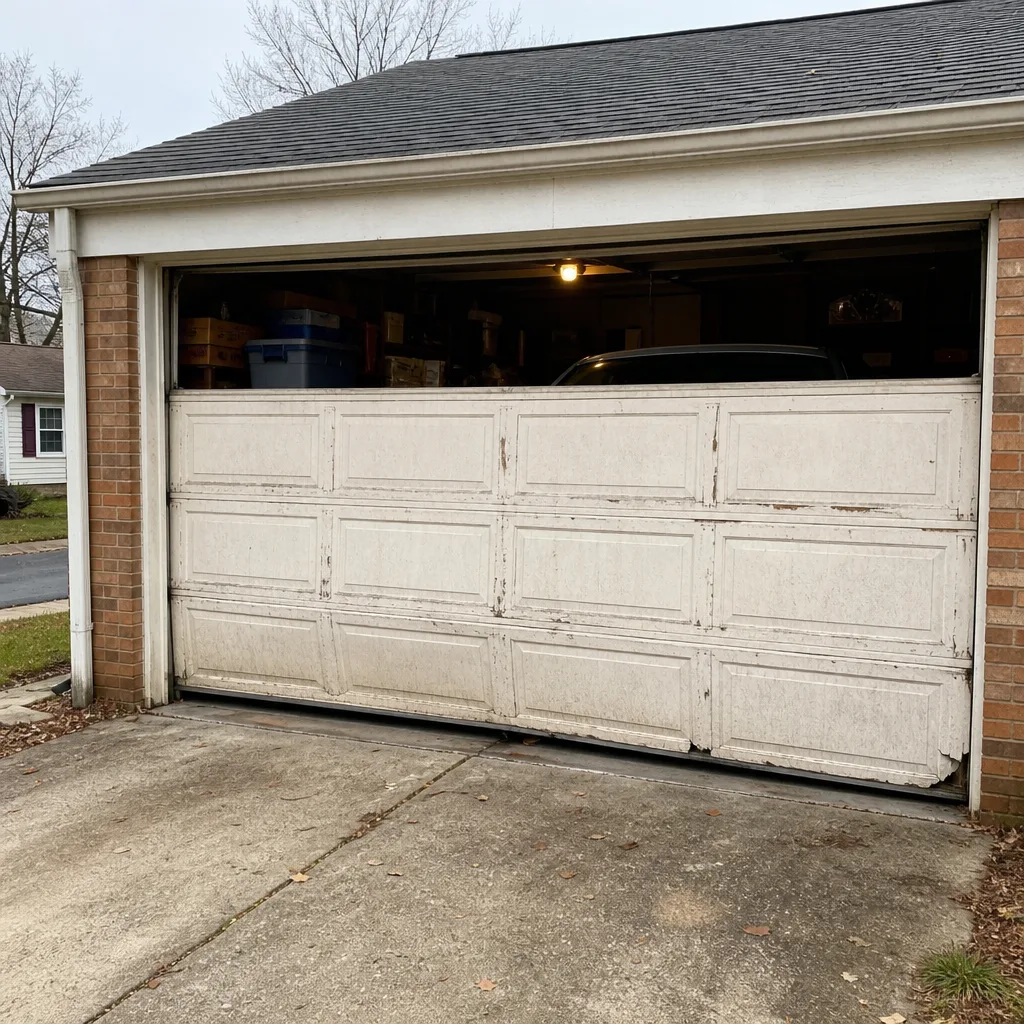 Before
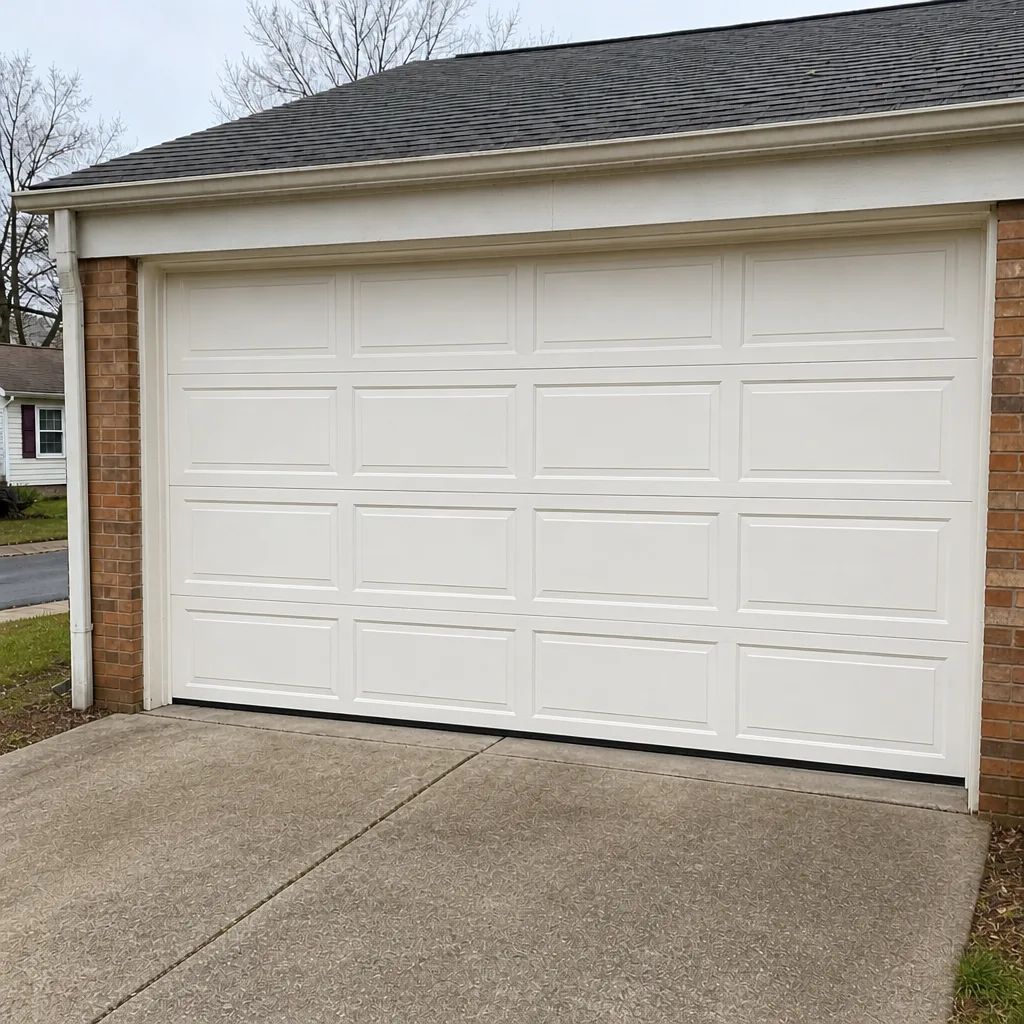 After
When to Call a Professional
Some garage door problems are a nuisance. Some are a hazard. The line between them is usually obvious when you’re standing next to the door. Call a professional the moment you hear a loud snap from the spring area, notice the door hanging crooked, see a cable off its drum, or find the door going up and down unevenly. Stop using the door if the opener is running but the door isn’t moving, if the door doesn’t stay up on its own, or if a torsion spring looks visibly separated. Springs and cables under tension are a genuine safety hazard, and a failing spring can release suddenly. Don’t try to adjust, cut, or rewind a spring yourself, and don’t let a general handyman do it either. Opener failures that leave you unable to close the door are a security concern and worth a call sooner rather than later. If the door won’t open, won’t close, or is stuck halfway, emergency service matters. Burke Garage Door Repair Pros offers free estimates in Burke – call (888) 340-6306 and we’ll help you sort out what’s wrong and what it takes to get back up and running.
Frequently Asked Questions
Ask for the license number and the exact registered business name, then verify both in Virginia’s contractor license database through the Department of Professional and Occupational Regulation. The name on the license should match the name on your written estimate and on the certificate of insurance. If the contractor can’t produce a number or the names don’t match, that’s a serious red flag – call (888) 340-6306 for an exact quote from a company that will answer this question directly. Estimates are free.
You need a written scope of work. A verbal quote only protects the price, and even then only if there’s a written record. The written scope should name the specific parts and brands being replaced, list what labor is included, say explicitly what’s excluded, and state the warranty on parts and labor. The price should be quoted and agreed before any work starts. If your contractor resists putting it in writing, hire someone else – call (888) 340-6306 for a written free estimate.
Ask three things: whether they’re replacing one spring or the matched pair, what cycle life the replacement spring is rated for, and how they’ll determine the correct spring for your door’s weight and height. A real specialist answers all three without hesitation. A matched pair usually costs about twice a single spring because both are being replaced together. Spring replacement is dangerous enough that it shouldn’t be attempted by anyone outside the trade – call (888) 340-6306 to get a written quote for the job.
Ask what percentage of their work is garage doors, then test them on brand and opener knowledge. A specialist works on the brand you already have rather than pushing a replacement, knows the difference between torsion and extension springs, and handles opener diagnostics as part of the same service. A generalist will give vague answers and steer toward price. Burke Garage Door Repair Pros works on eight major brands including Genie, Clopay, Amarr, and Wayne Dalton, and garage doors are the only trade we service – call (888) 340-6306 for a free estimate.
It means the written estimate you receive sets the final price for the scope as described. If the technician finds something different once the door is open (a cracked panel, a worn cable, another underlying problem), they should stop and show you the change in writing before starting additional work. A verbal “we’ll figure it out on site” is not the same thing. Ask the contractor to confirm the process in the estimate. Call (888) 340-6306 to get an itemized free estimate for your Burke job.
If the door won’t close and the house is exposed, emergency service is worth calling for – same-day availability for a door that’s a security or safety risk is a valid reason to hire fast. That’s different from a same-day pressure sales tactic for a job that isn’t urgent. If a contractor is pushing you to sign “today only” on a job with no safety issue, wait. If your door is genuinely stuck, call (888) 340-6306 and we’ll get you scheduled for emergency service.
The Bottom Line
Hiring a garage door contractor in Burke comes down to five things: a verified Virginia license and current insurance, a written scope of work that names parts and brands, confirmation that the company specializes in garage doors rather than treating them as a side job, specific answers to spring and opener questions, and warranty language that’s actually enforceable. Price matters, but a low price on a vague scope costs more in the end. If you’re evaluating multiple contractors this week, start with the two-minute phone screening and the five-minute license check. Most of the rest solves itself. Burke Garage Door Repair Pros is a garage door specialist for spring, opener, panel, and full door work – whether you’re choosing a contractor or you’ve already decided. Call (888) 340-6306 for a free estimate, and we’ll walk you through the same questions we’d ask in your position.
Related Services in Burke
If you’re working through the hiring process and want more detailed information on any single service, these pages cover the specifics:
- Burke Garage Door Repair Pros – our main service page for Burke homeowners.
- garage door repair – common repairs and what to expect.
- garage door opener repair – diagnostics when the opener is the problem.
- garage door spring repair – torsion and extension spring work.
Our technicians have up to 12 years of experience. Every estimate is free and the price is quoted and agreed before any work starts.
Written by the team at Burke Garage Door Repair Pros.
What happens when you call
- 1
A real person answersNo phone trees – you reach a local pro.
- 2
You get an upfront price rangeHonest numbers before anyone is dispatched.
- 3
A background-checked tech heads outLicensed & insured, dispatched right away.
- 4
You approve before work beginsNothing starts until you say go.